Your China & Yunnan Travel Experts

 Ask a Question
Chongqing is a birth place of hotpot. If you come to Chongqing, you should not miss this famous food during your Chongqing tour. Chongqing local people consider the hotpot a local specialty, which is noted for its peppery and hot taste.
You may be surprised to learn that the first diners of Chongqing hot pot were the poor boatmen plying the Yangtze and Jialing Rivers in the late 19th century. In those days, these laborers could barely afford a meal with multiple dishes. To fill their stomachs, they devised an ingenious solution: instead of buying ingredients separately, they collected cheap cuts of meat (like beef offal), discarded vegetable scraps, and local spices, then boiled them all together in a large iron pot over a charcoal fire. This one-pot meal kept them warm in the cold, damp river winds and provided ample energy for their hard work.
The original hot pot was simple but flavorful, with a broth seasoned mainly with chili peppers and Sichuan peppercorns—ingredients that were abundant and affordable locally. Over time, this humble working-class meal gradually evolved, incorporating more ingredients and refining the broth recipe. By the mid-20th century, it had become a beloved local delicacy, and today, it can be found in every corner of Chongqing, from street-side stalls to high-end restaurants, and has even gained popularity across China and around the world.
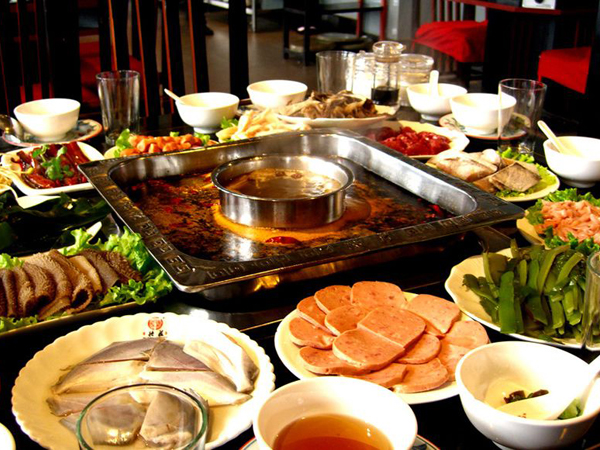
• Cattle-gut Hotpot (Niugut Hot Pot 牛肚火锅)
As the most traditional and iconic type of Chongqing hot pot, Cattle-Gut Hot Pot is a testament to the dish’s working-class roots. It is characterized by its fiery, robust broth—dark red in color, thick with chili oil, and packed with the numbing heat of Sichuan peppercorns. The classic ingredients include cattle gut, cattle waist, beef slices, and a variety of local vegetables like lotus root, taro, and Chinese cabbage.
Unlike modern self-service hot pots, the traditional Cattle-Gut Hot Pot was often served with pre-selected ingredients, allowing diners to savor the authentic combination of flavors. The broth is simmered for hours with a blend of spices such as star anise, cinnamon, and fennel, creating a complex taste that is both spicy and aromatic. For first-timers, it’s a bold introduction to Chongqing’s culinary style, but locals swear by its authentic flavor.
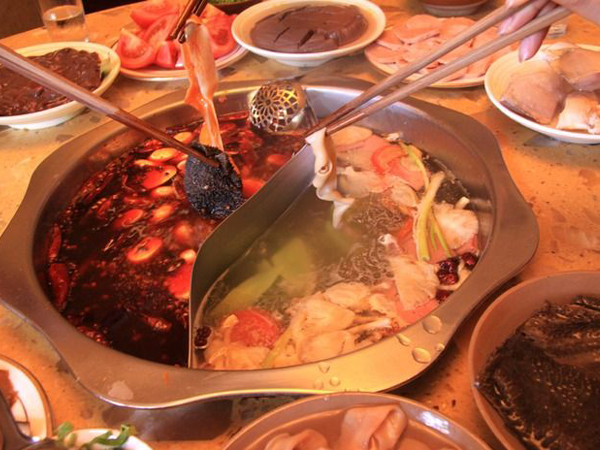
• Yuanyang Hotpot (Yuan Yang Guo 鸳鸯锅)
Yuanyang Hot Pot is a creative innovation that caters to diverse tastes, making it popular among groups with varying spice tolerances. The name “Yuanyang” (mandarin duck) comes from the fact that the pot is divided into two sections by a copper or stainless steel divider, just like the paired mandarin ducks.
One section is filled with the classic fiery broth of Cattle-Gut Hot Pot, while the other side features a mild, savory broth—commonly a bone broth, chicken broth, or tomato broth. This allows diners to enjoy both the spicy, numbing flavor of traditional Chongqing hot pot and a milder option. The choice of ingredients is entirely up to the diners, from fresh seafood and premium meats to a wide range of vegetables and tofu products. It’s no wonder Yuanyang Hot Pot is often called the “Innovative Sichuan Hot Pot” for its ability to balance tradition and versatility.
• Ma La Tang – a similar food to hotpot
The other famous local food is hot and spicy Ma La Tang, which is similar to hotpot in some way. Literally, "ma" means numbness in the mouth, "la" is chili hot and "tang" means piping hot.
Ma La Tang, with various raw ingredients cooked in a communal pot of steaming stock blended with spices, originated in Sichuan's largest city, Chongqing. The double-sided soup pot, placed on a central table burner, is the focal point of the meal. Ingredients include fresh sliced abalone, sea cucumber, hog tendon, Beijing cabbage and beef dumpling, prawns, carp fish fillet, bean curd, chicken fillet and vegetables. The excellent dipping mixture of sesame oil, chili sauce, peanut sauce, chopped chilies and garlic combine to make magic. Savory titbits are appetizingly tasty -- egg coated glutinous square, crispy spring roll, fried buns, eight treasure black rice and water chestnut jelly. Diners cook their food right at the table in steamingMa La Tang, a savory broth blended with the spices found in abundance in Sichuan
Chongqing hot pot’s unique flavor lies in its broth and ingredients. The classic spicy broth is made by stir-frying chili peppers, Sichuan peppercorns, ginger, garlic, and a variety of spices in hot oil before adding stock and simmering for hours. This slow cooking process allows the flavors to meld together, creating a broth that is both spicy and deeply savory.
In addition to the traditional cattle offal, modern Chongqing hot pot ingredients have expanded to include premium meats (like Wagyu beef slices), fresh seafood, and a variety of “mountain and river delicacies” such as bamboo shoots, mushrooms, and water plants. A must-try ingredient is “fatty beef rolls” (feiniu juan), which melt in the mouth and absorb the broth’s flavor perfectly.
A good dipping sauce is essential to enjoying Chongqing hot pot. Locals typically opt for a “clear sauce” made with sesame oil, minced garlic, chopped scallions, and a squeeze of vinegar. The sesame oil helps to cool down the spiciness of the broth, while the garlic and vinegar add a refreshing tang. For those who love extra heat, adding chili sauce or chopped fresh chilies is a popular choice. Some diners also enjoy mixing peanut sauce into their dipping sauce for a creamier texture.
When eating Chongqing hot pot, there are a few etiquette tips to keep in mind: always cook ingredients in the correct order—start with meats and seafood, then vegetables, as this helps to preserve the broth’s flavor. Also, avoid overcooking delicate ingredients like beef slices, which are best cooked for just a few seconds until they turn pink.
For first-timers who can’t handle too much spice, it’s recommended to start with Yuanyang Hot Pot and gradually try the spicy side. Drinking a glass of local beer or a cup of chrysanthemum tea can help to relieve the spiciness. Also, be sure to pace yourself—Chongqing hot pot is meant to be enjoyed slowly, with friends and family.

From on request

From $ 327

 English