Your China & Yunnan Travel Experts

 Ask a Question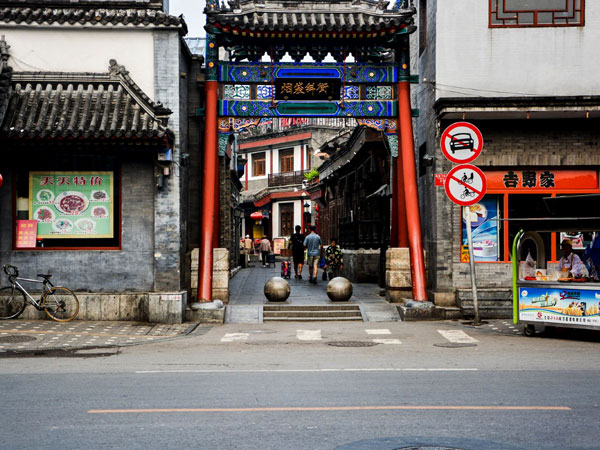
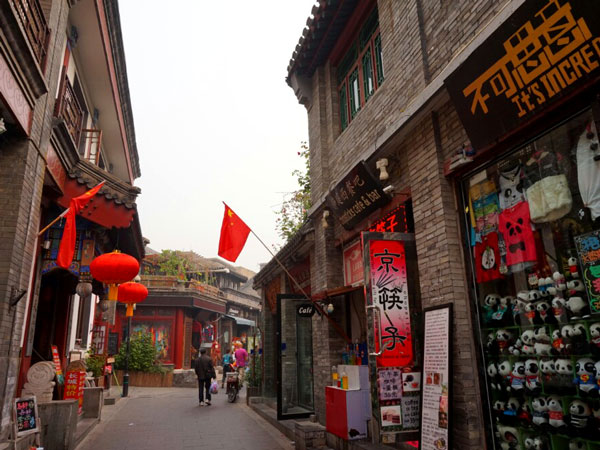
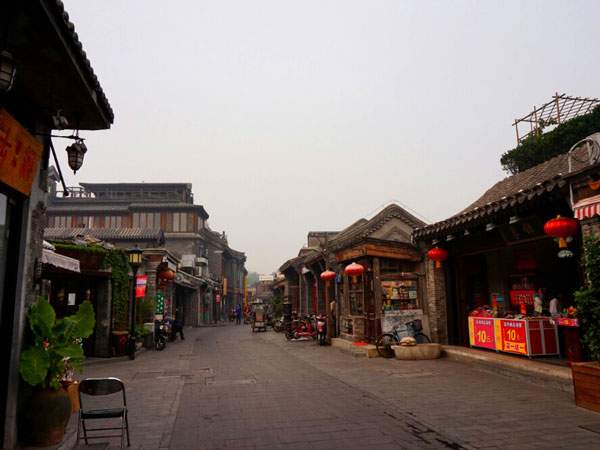
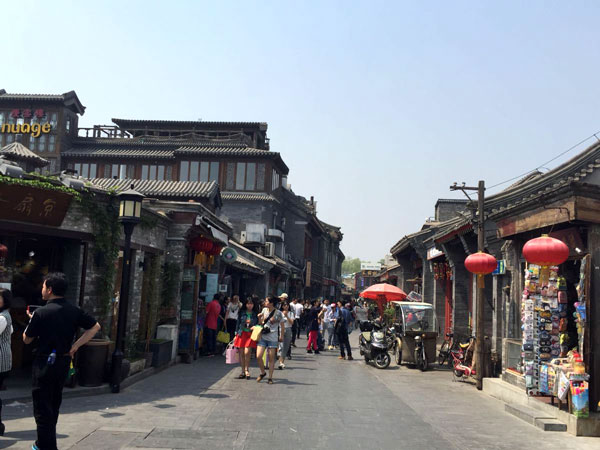
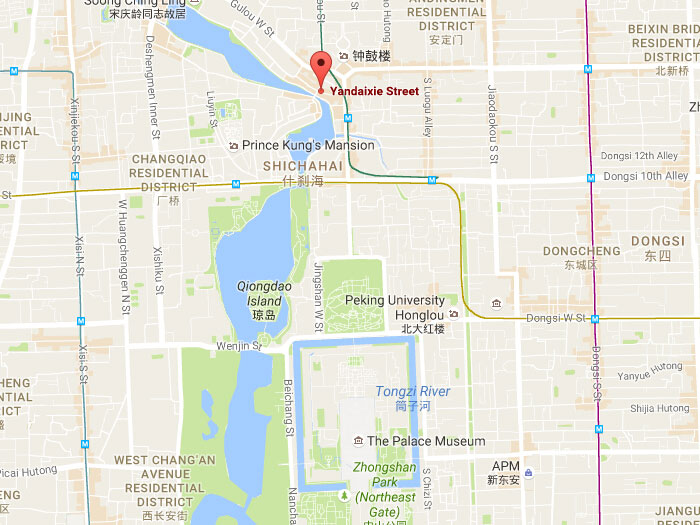
Di'anmenwai Main Street, Xicheng District, Beijing, China
A commercial street with traditional cultural features
Yandaixie Street is located in the front of the Drum Tower in Beijing Di'anmenwai Avenue, north of the Qianhai Lake in Shichahai area. It has a total length of about 232 meters and a width of 5-6 meters. It is Beijing's oldest commercial street which has numerous hotels, inns and other foreign trade stores. Yandaixie Street was built in the Yuan Dynasty. Until the Qing Dynasty (1644-1911) to the late 1920s or 1930s, the street mainly operated smoking sets like drought tobacco pouch, hookah, etc. antiques, paintings, Frame and Mounting, stationery and snacks, service industries, etc. The architectural style here is simple along with characteristics of the northern part of the Beijing city. It is a famous cultural street in the north city of Beijing, where left many cultural celebrities' footprint.
Speaking of the origin of its name "Yandaixie Street", it was said that during ancient times, the people living in the northern part of the city were fond of smoke, they often put the tobacco in a tobacco pouch. As the increasing demand of the tobacco pouches, the street appeared numerous stores selling tobacco pouches. In addition, the street itself just looks like a tobacco pouch. This slender and diagonal street just looks like a smoking bar next to Houhai, in the north of Di'anmen, in front of the Drum Tower. Based on this two reasons, to name the street "Yandaixie Street" is veritable.
Yandaixie Street was the 2nd street to be named " as "China's historical and cultural street" by the Ministry of Culture, the State Administration of Cultural Heritage on November 10, 2010 following Beijing Imperial College Street in the Andingmen of Dongcheng District. Experts believed that the fact of Yandaixie Street selected "China's historical and cultural street " thanks to its not changed alley texture and basic architectural style, its inheritance of local people's life, its good protection work of rich historical and cultural information.
Today, Yandaixie Street has become one of Beijing’s most popular tourist destinations, alongside landmarks like the Drum Tower and Nanluoguxiang. It is a perfect place for both locals and visitors to explore traditional Beijing culture, savor authentic snacks, browse antique stores, and admire Chinese calligraphy and architecture.
Architectural Layout
Yandaixie Street starts from Di’anmenwai Avenue in the east and ends at Xiaoshibei Hutong in the west, stretching in a northeast–southwest direction. The entire area covers 14 hectares, with a total street length of 232 meters and a width of about 4 meters. Along the street stand several cultural relics and protected sites, including Guangfu Temple, Sanyuan Fumo Palace, and traditional storefront buildings. The entire area retains the authentic appearance of Beijing’s old hutongs, with grey brick walls, wooden doors, and curved eaves that tell stories of centuries past.
Transportation:
The street is easily accessible by public transportation. Take Metro Line 8 or Line 10 to Shichahai Station, and exit from Exit B or C—it’s only a short walk to the entrance. If taking a bus, you can ride Bus 13, 42, or 124 and get off at Drum Tower (Gulou) or Di’anmen West Stop, then walk a few minutes to reach the street.
Tickets:
Yandaixie Street itself is free to visit, but some attractions within it—such as Guangfu Temple or Qingyun Building—may require separate entrance fees. It is recommended to check ticket details in advance.
Recommended Visiting Time:
Plan half a day to a full day to explore Yandaixie Street. This allows enough time to experience its historic charm, visit the temples and shops, enjoy some snacks, and take photos along the picturesque street.
Guangfu Temple (广福观)
Located on the north side of Yandaixie Street, Guangfu Temple is one of the best-preserved Taoist temples in the Shichahai area. It was originally built in the third year of Emperor Tianshun of the Ming Dynasty (1459). Inside the temple stands a stone tablet from 1460 recording its reconstruction. The architecture is elegant and ancient, offering visitors a peaceful space to appreciate Taoist culture.
Qingyun Building (庆云楼)
Built in 1802 during the reign of Emperor Jiaqing, Qingyun Building was the earliest high-end Shandong cuisine restaurant in Beijing. It used to be a gathering place for officials, scholars, and celebrities. In 2009, it was rebuilt on its original site with a design faithful to its Qing-era style, featuring a full solid-wood mortise-and-tenon structure. Visitors can dine here to taste authentic Shandong cuisine in a historical setting.
The Great Qing Post Office Cabinet (大清邮政信柜)
Located at No. 53 Yandaixie Street, this site once belonged to the Shichahai Post Office under the Di’anmen Post Bureau. In 2011, it was restored and reopened as the “Great Qing Post Office Cabinet.” The shop is beautifully decorated and sells creative cultural souvenirs, such as postcards, envelopes, and Beijing-style sachets. Visitors can even experience writing and mailing letters the old-fashioned way, immersing themselves in vintage postal culture.
Site of the Yuan Dynasty Fish Hall (元代打鱼厅旧址)
At No. 11 Yandaixie Street lies the site of an ancient government office from the Yuan Dynasty, now repurposed into a shop. The site stands as a silent witness to the long and evolving history of Yandaixie Street and holds significant historical value.
Explore Unique Shops:
Both sides of Yandaixie Street are lined with traditional and modern shops selling handicrafts, art, snacks, and souvenirs. You can find authentic Beijing gifts such as cloisonné enamel, paper fans, and Tu’er Ye (Rabbit God figurines), or try delicious local snacks like Mending Meat Pie, Fried Intestines, and Douzhi (fermented mung bean drink).
Experience Hutong Charm:
Take a leisurely stroll along the blue-stone pavement, admire the old grey-brick residences, and enjoy the nostalgic atmosphere of old Beijing. The red lanterns, hanging shop signs, and traditional decorations create a charming scene that feels like stepping back in time.
Photo Spots:
Yandaixie Street’s architecture and narrow layout make it a great spot for photography. You can take photos at iconic sites like Guangfu Temple, Qingyun Building, or the Great Qing Post Office, as well as at small alley corners and storefronts that showcase traditional Beijing style.
Yandaixie Street can be very crowded, especially during weekends and holidays. Try visiting early in the morning or on weekdays to avoid large crowds.
Some stores open later in the day, while others may close early. Check specific business hours if you plan to visit particular shops.
Be respectful of cultural relics—avoid touching or damaging old buildings, decorations, or historical artifacts.
From on request
From $ 306
From on request

 English