Your China & Yunnan Travel Experts

 Ask a Question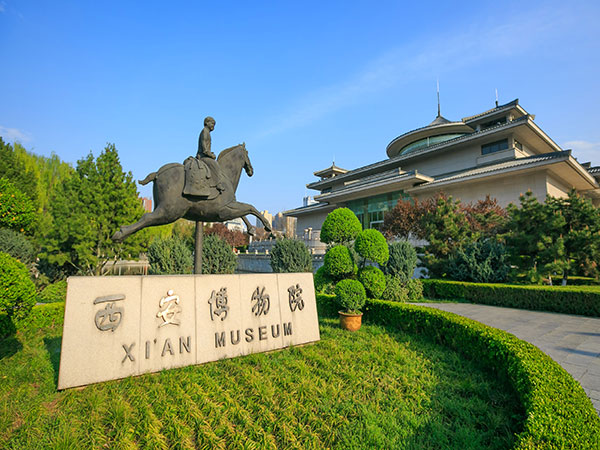
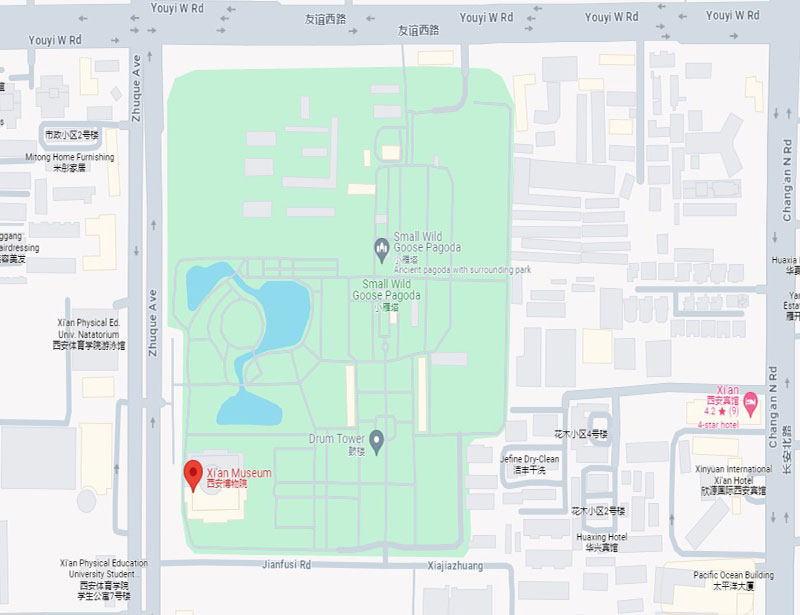
No. 72 Youyi West Road, Beilin District, Xi'an City (North Gate); Middle section of Zhuque Avenue, Beilin District, Xi'an City (West Gate)
Learn about the historical and cultural relics of Xi'an, visit nearby historical attractions
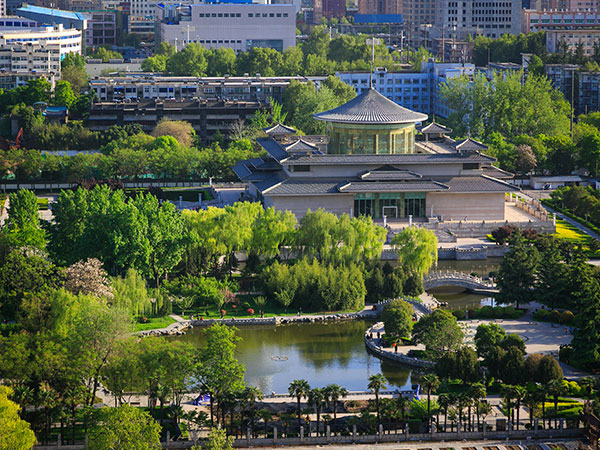
The Xi'an Museum is located at No. 72 Youyi West Road, Beilin District, Xi'an City, Shaanxi Province. It covers an area of about 160,000 square meters and has a building area of 16,000 square meters. It is a local comprehensive museum that integrates cultural relic collection, scientific research, social education, and garden leisure.
The Xi'an Museum houses a collection of 130,000 cultural relics from different historical periods in Xi'an. Among them, there are over 14,400 precious cultural relics that hold national significance. These include artifacts unearthed from influential dynasties like Zhou, Qin, Han, and Tang that have played a crucial role in shaping Chinese history. The museum offers captivating exhibitions with the use of modern technology such as virtual electronic flip books, digital phantom demonstrations, interactive displays, etc., to enhance the exhibition content and vividly showcase these cultural treasures while providing insights into the ancient capital's history. Apart from exploring the museum itself, you can also visit nearby historical attractions like the Jianfu Temple Site and the Small Wild Goose Pagoda.
The cultural relics on display in the museum are selected from the collections with high levels, strong representativeness, and wide influence. The exhibition of the Xi'an Museum's cultural relics hall consists of three parts: basic exhibition, thematic exhibition, and temporary exhibition.
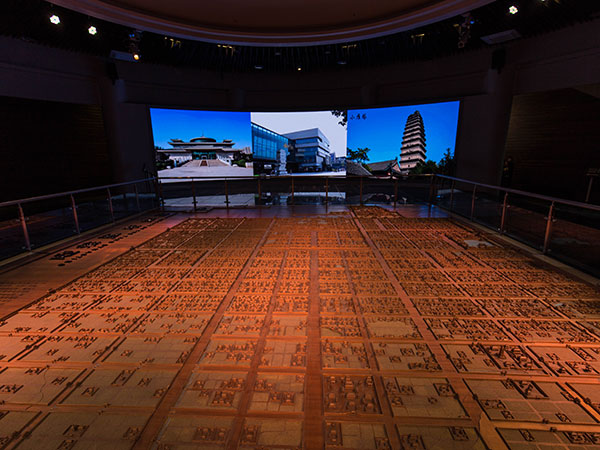
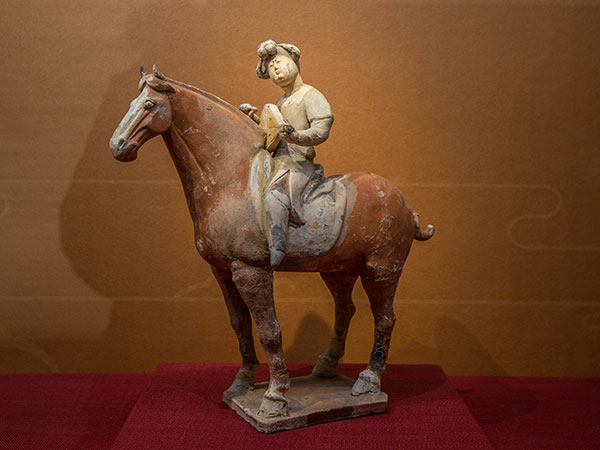
The basic exhibition focuses on Xi'an as the ancient capital of 13 dynasties, showcasing over a thousand years of capital construction and more than three thousand years of urban development. It presents the historical context of Xi'an's urban growth through various city models representing the Zhou, Han, Tang, Song, Yuan, Ming, and Qing dynasties. Additionally, it displays representative cultural relics unearthed in Xi'an in chronological order. These include treasures like the Yongyu from the Western Zhou Dynasty, a gilt bronze bell containing fine wine from the Western Han Dynasty, figurines depicting ladies and flying horses from the Tang Dynasty. These precious artifacts further confirm Chang'an city's esteemed status as an ancient capital.
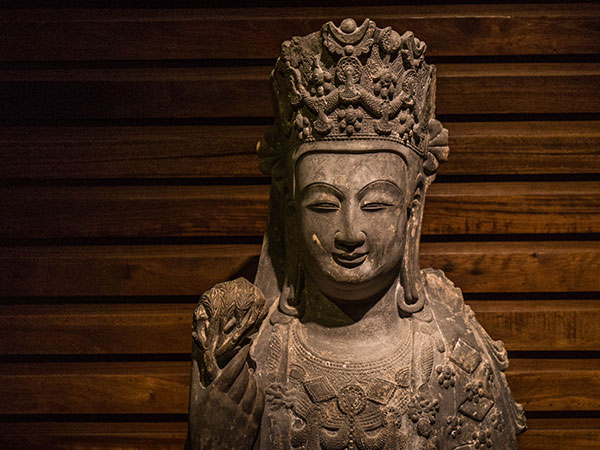
The thematic exhibitions at the museum showcase the rich history and culture of Xi'an, the ancient capital that has stood for a thousand years. These include "Treasure of the World - Chang'an Buddhist Statue Art Thematic Exhibition" and "Spirit of Heaven and Earth - Museum Collection of Ancient Jade Fine Exhibition". The temporary exhibitions are organized in various ways, such as self-organized, introduced, and cooperative exhibitions. They not only offer a wide range of exhibits but also maintain a high standard, attracting numerous visitors who praise them highly.
The Small Wild Goose Pagoda, originally called "Jianfu Temple Pagoda," was constructed in 707 AD during the Tang Dynasty. It can be found within the Jianfu Temple in Chang'an City. This Buddhist pagoda was built to house various sacred items such as Buddhist scriptures and statues brought back from India by the monk Yijing. Back then, it wasn't part of the Jianfu Temple complex but rather stood separately in a pagoda courtyard. Unfortunately, due to wars towards the end of the Tang Dynasty, the temple suffered repeated destruction and fell into ruin, leaving only the Small Wild Goose Pagoda intact. Eventually, the Jianfu Temple relocated to join forces with this preserved pagoda courtyard. Throughout subsequent dynasties like Ming and Qing, both the Jianfu Temple and Small Wild Goose Pagoda underwent numerous renovations for restoration purposes.
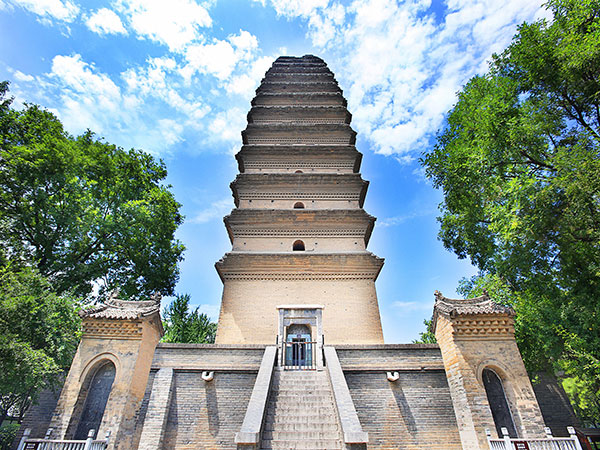
Jianfu Temple was originally built in the first year of Tang Wenzhong (684 AD). It was a Buddhist temple built by Tang Ruizong Li Dan for his father Tang Gaozong after his death. It was originally named Xianfu Temple, and it was renamed Jianfu Temple in the first year of Wu Zetian's Tian Shou (690 AD). Jianfu Temple was a famous royal temple in the Tang Dynasty and one of the important Buddhist scripture translation sites in the Tang Dynasty. The existing ancient buildings of Jianfu Temple were rebuilt in the Ming and Qing dynasties. The ancient buildings in the temple generally continued the layout of the Zhengtong period of the Ming Dynasty. The temple also houses stone statues, horse pillars and other folk cultural relics and various folk art exhibitions.
Bus routes
1. Take bus routes 21, 203, 224, 410, 521, 700, Tourist Line 7, Tourist Line 8 to Small Wild Goose Pagoda Station (close to the north gate)
2. Take bus routes 18, 204, 218, 407, 713, 720 to Xiajiazhuang Station (close to the west gate)
Subway: Nanshaomen Station (Exit F): Take Xi'an Subway Line 2/5 to Nanshaomen Station (Exit F), and walk 399 meters to reach the scenic spot.
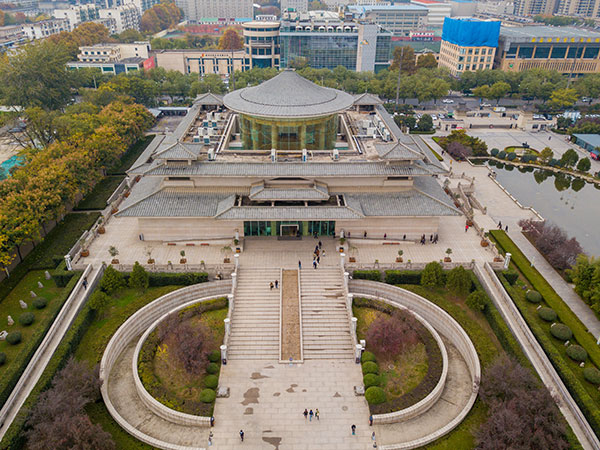
The Xi'an Museum is a city museum that integrates the museum itself, the Tang Dynasty Jianfu Temple ruins, and the Small Wild Goose Pagoda. Its history can be traced back to the Tang Dynasty Jianfu Temple, within which the Small Wild Goose Pagoda was built during the Jinglong period of Emperor Zhongzong. On May 18, 2007, the Xi'an Museum, designed by the renowned architect Zhang Jinqiu, officially opened to the public. The architecture incorporates Tang-style elements, with a cubic main structure and a circular central tower, reflecting the traditional concept of “Heaven is round, Earth is square.” Through exhibitions such as “Millennium Ancient Capital” and “Imperial Capital Panorama,” the museum showcases Xi'an’s historical evolution as the capital of thirteen dynasties, from Fenghao in the Western Zhou, Chang’an in the Sui and Tang, to Xi'an in the Ming and Qing, recreating the splendor of the ancient imperial capital. In 2014, the Small Wild Goose Pagoda was listed as a World Cultural Heritage site as part of the Silk Road: Chang’an–Tianshan Corridor network.
The main building of the Xi'an Museum was designed by academician Zhang Jinqiu of the Chinese Academy of Engineering, integrating the traditional philosophical idea of “Heaven is round, Earth is square.” The structure combines a square base with a circular central hall, symbolizing the harmony of heaven and earth and forming a dialogue with the Small Wild Goose Pagoda and the ancient Jianfu Temple complex. Lotus petals decorate the top, and at dusk, sunlight filters through the glass dome to create a serene and sacred light effect. The overall style carries the grandeur of Tang architecture while blending modern materials and structural techniques to achieve a fusion of ancient and contemporary aesthetics.
Inside, the museum has two above-ground floors and one basement level. The entrance is on the first floor, and the exit is in the basement. The central hall on the first floor is circular, while the second floor features a ring-shaped corridor, with exhibition halls distributed around it.
Yongyu (Western Zhou Dynasty): A bronze vessel with 123-character inscriptions recording the allocation of land along the Luo River by King Yi to the nobility, providing valuable material for studying Western Zhou land systems and official ranks.
Gou Lian Yunlei Patterned Ding: Standing 85.5 cm tall and weighing 85.2 kg, this bronze ritual vessel features cloud and thunder patterns on the lower abdomen, taotie motifs on the belly, and Kui dragon designs on the ears and legs. It is an important ceremonial object of the Western Zhou period.
Qin Cloud-Patterned High-Footed Jade Cup: Unearthed from the Epang Palace site in 1976, this unique Qin dynasty jade cup is made of green jade, with a high foot and cloud-pattern decoration, reflecting the exquisite craftsmanship and aesthetic of Qin jade.
Tang Sancai Flying Horse: Excavated from a Tang tomb in Lianhu District in 1966, measuring 38 cm high and 52 cm long, it consists of a rider of Hu nationality and a galloping horse, featuring vivid modeling and vibrant glaze, representing the finest work of Tang Sancai and the Silk Road trade.
Northern Zhou Shi Jun Tomb Stone Coffin: Unearthed in 2003 in Weiyang District, Xi'an, this coffin is shaped like a traditional Xieshan-roofed hall with walls carved with reliefs depicting four-armed guardians, Zoroastrian gods, hunting, banquets, travel, trade caravans, sacrificial ceremonies, and ascension, serving as evidence of cultural exchange along the Silk Road.

 English