Your China & Yunnan Travel Experts

 Ask a Question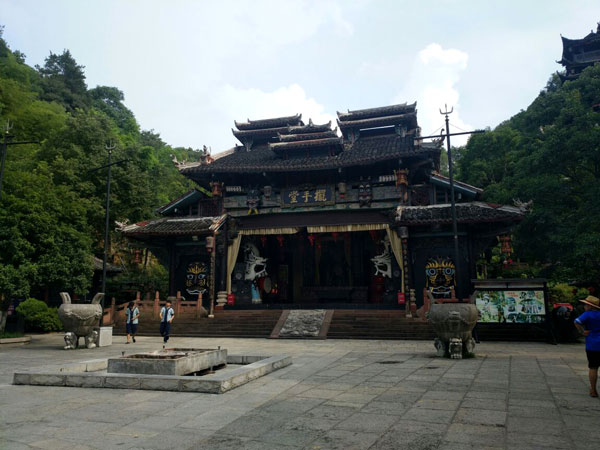
Yongding District, Zhangjiajie 427000, Hunan Province, China
Ideal place to learn Tujia folk customs
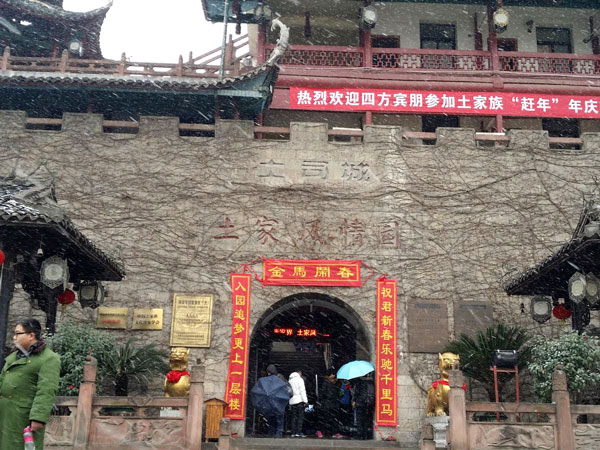
Located the central area of Zhangjaijie city in Hunan Province, China, Tujia Ethnic Folk Garden (Chinese name: 土家风情园) is a tourist spot that displays the classic buildings, folk customs, food, dance of Tujia ethnic minority. It is converted from the previous castle of Tu Si(appointing national minority hereditary headmen in the Yuan, Ming and Qing Dynasties) of Tujia ethnic minority. Here you would get to learn what kind of house that Tujia people used to live in - stilted building of Tujia nationality(Diaojiaolou), traditional customs of wedding ceremony and wild Tujia dancing. Diaojiaolou are very functional and similar to those of the Miao. On the lower floor is for raising livestock; while the living rooms and bedrooms are kept upstairs. This design focuses on the use of small rooms but is also well ventilated, damp-proof and clean. The largest and tallest wooden stilted building is right inside the garden. And if you come in the right time, you may catch a chance to see the traditional of Tujia nationality - Mao Gu Si Dance.
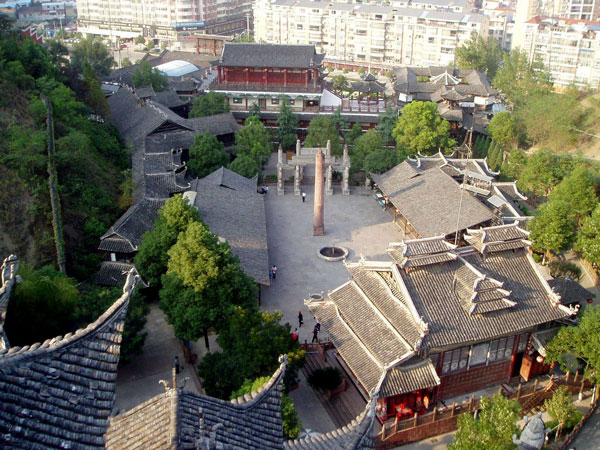
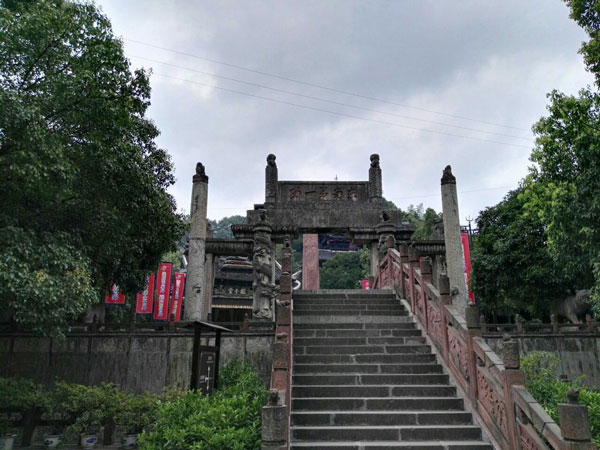
When you step into the garden, the first thing coming to your eye is a stone stele building named as “东南第一功" in Chinese. Passing by the stone stele you will reach a small square. In its south is the hall for worship, where is dedicated to ancestors of Tujia nationality of this area. You can see a tall golden statue, stone tripods, dragon pillars and other sacrificial offerings.
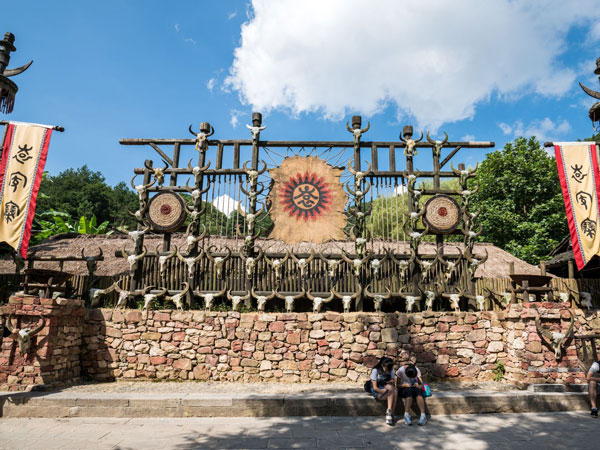
In the square in the front of the worship hall, visitors have the opportunity to enjoy performances of the Tujia ethnic customs, which is scheduled at 10:00am and 16:00pm daily. The performances include Mao Gu Si dance, copper bell dance, waving dance, Daliuzi(beating symbals of Tujia nationality), etc.
Performance in Tujia Ethnic Folk Garden
In addition to viewing the wonderful Tujia ethnic dance, the Jiuchongtian stilted building is the key highlight in the garden. This building is made all by wood and has twelve layers. It is currently the highest and the largest all-wooden stilted architecture in the country. Inside the building, it displays local folk customs and culture of Tujia minority in different layers, such as wedding customs of Tujia minority, headwears, clothing, batik craft and works, tapestry, silverwares, tree root carvings, precious cultural relics, etc. You’d better hire a local tour guide to visit with you, so that you can get explanation of the things that you see.
You are interested in tasting local food, there are also authentic Tujia meals available. Local food like smoked meat, Sanxiaguo Dish, the sour fish, the stewed chicken with Gastrodia elata soup, etc. are quite famous.
The scenic spot is located in the downtown of Zhangjiajie and easily reached by public transportation. You may take Bus Route 5 or 10 to Tujia Ethnic Folk Garden Station (土家风情园站). Or you may take a taxi to get there.
It is recommended to spend 1 or 2 hours to tour around the garden.
Within the Tujia Ethnic Folk Garden stands the Tusi Castle, surrounded by thick stone walls that once served as the stronghold of the hereditary Tusi rulers. The highlight of this castle complex is the Jiuchongtian Hereditary Hall, a magnificent architectural masterpiece of the Tujia people. Rising 48 meters high with 9 levels and 12 floors, it is built on an 80-degree slope entirely with wooden joints—no iron nails were used in its construction. This unique structure was officially recognized by the Guinness World Records in September 2002 as the largest, tallest, and most complete wooden stilted building in China.
Inside Jiuchongtian Hall, visitors can explore a series of themed exhibition halls that together form a living museum of Tujia culture:
Zhizhuting Pavilion
The pavilion, supported by five massive wooden pillars, symbolizes the five guardian deities of the land — representing east, west, south, north, and center. Each pillar bears a carved statue of one of the Tujia ancestors: Ba Linjun, Duke Peng, Lord Xiang, Hero Tian, and King Qin Hou. Together, they signify blessings for prosperity, harmony, and favorable weather for the Tujia descendants.
Taiwan Tiger Stele
The tiger is a revered totem of the Tujia people. The “Tiger” inscription here was originally written by Liu Mingdeng, a Tujia general who served as the Commander-in-Chief in Taiwan during the Qing Dynasty (in 1867). Legend says he wrote this powerful character during a storm to calm the fierce winds. In Chinese tradition, tigers are believed to drive away evil spirits and control the elements. The character “虎” (tiger) on the stele is one meter high and forty centimeters wide; the replica displayed here was faithfully reproduced from the original stone tablet located along the Caoling Ancient Trail in New Taipei City, Taiwan.
Southeast First Merit Archway (Dongnan Diyi Gong)
This is the largest stone archway in southern China, commemorating the bravery of the Tujia soldiers. During the Jiajing period of the Ming Dynasty, when Japanese pirates invaded the southeastern coast, the Tusi King of western Hunan led 30,000 Tujia warriors to travel thousands of miles and fight for four years. They ultimately achieved a decisive victory, and the emperor awarded them the honorary title “Southeast First Merit” as recognition of their outstanding contribution to the nation.
Open-Air Baishou Square
This square serves as the ceremonial site for performing the traditional Baishou Dance and the Mao Gu Si Dance, both of which are key parts of Tujia ancestor worship. The Mao Gu Si Dance, often called the “living fossil of Chinese drama,” is a primitive and expressive performance where men wear straw and women dress in leaves or bark to reenact scenes of early Tujia life. Visitors can experience the powerful rhythm, wild spirit, and deep cultural symbolism of this ancient ritual dance.
Tujia Mountain Village
In addition to the grand castle, the Tujia Mountain Village features scenic spots like Xiunv Tower (Maidens’ Tower), Sheba Building, and Prince’s Pool. Around the Prince’s Pool, visitors will find covered bridges and layers of stilted houses that perfectly capture the essence of Tujia architecture and natural beauty.
The entire Tusi Castle complex contains a vast collection of traditional architectural elements and artifacts:
308 carved wooden windows
432 carved wooden panels
318 carved wooden doors
999 stone piers (Sangdengyan)
Over 5,000 meters of red sandstone railings
More than 10,000 cultural relics
Over 500 local chronicles and folk manuscripts
These details showcase the remarkable craftsmanship and artistic achievements of the Tujia people across centuries.
The Tujia Ethnic Folk Garden offers both sightseeing and cultural immersion experiences. Travelers who take a quick tour can finish in about 2 hours, while those who wish to explore in depth — watching performances, visiting museums, and appreciating local architecture — should plan 3 to 4 hours.
After your visit, don’t miss the chance to dine at the local Tujia restaurant nearby, where you can enjoy authentic dishes such as smoked meat, Sanxiaguo (three-delicacy stew), sour fish, and chicken stew with Gastrodia elata soup — a flavorful finale to your Tujia cultural journey.
From $ 451
From $ 438

 English