Your China & Yunnan Travel Experts

 Ask a Question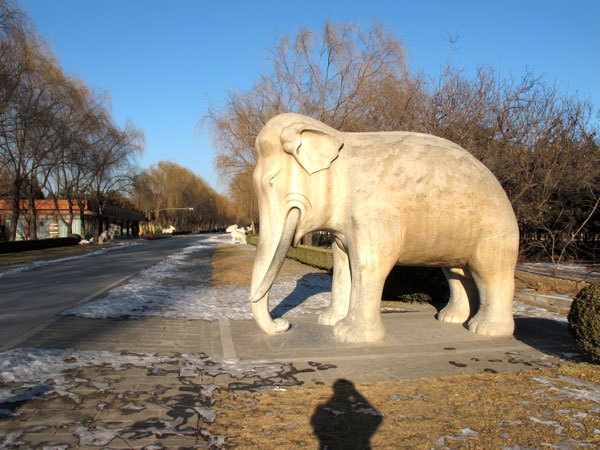


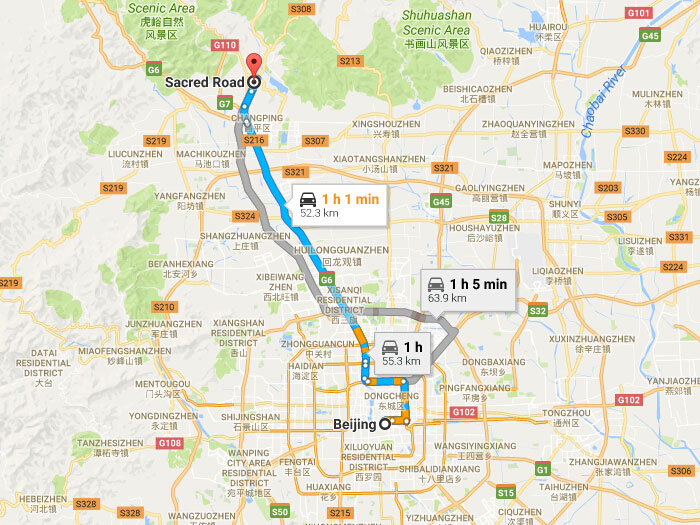
Ming Tombs area, Changping District, Beijing, China
Historical site; The main gate of the Ming Tomb area
The Sacred Way, or Shen Dao (神道), is the ceremonial avenue leading to the Ming Tombs (十三陵) — the burial site of 13 emperors of the Ming Dynasty (1368–1644). Situated about one kilometer north of the Great Red Gate (Dahongmen), this ancient path served as the “road to heaven”, believed to guide the emperor’s soul to the afterlife. It is the spiritual and architectural prelude to the magnificent tomb complex hidden among the Tianshou Mountains.
The Sacred Way begins at the Great Red Gate, the main gate to the Ming Tombs area. In ancient times, two stone tablets were placed on either side of the gate, inscribed with the rule:
“Dismount here – all dignitaries, officials, and others.”
This command emphasized respect for the emperors resting within. The central archway was reserved exclusively for the coffin of a deceased emperor, while the living emperor, when coming to pay homage to his ancestors, used the left entrance — symbolizing humility before Heaven and his forebears.
About one kilometer further north stands the Stele Pavilion, one of the most symbolic structures along the Sacred Way. Inside the pavilion lies a massive stone stele mounted on the back of a stone tortoise, known in Chinese mythology as Bixi (赑屃) — the Dragon’s Son.
The stele bears an inscription recounting the life and achievements of Emperor Yongle (Zhu Di), the third emperor of the Ming Dynasty, who relocated China’s capital to Beijing and initiated the construction of the Ming Tombs. The tortoise base represents longevity and stability, echoing the emperor’s eternal legacy.
Surrounding the pavilion are four ornamental pillars (Huabiao), each topped with mythical creatures facing in alternating directions. The outward-facing beasts symbolize the emperor’s duty to return to the palace and govern his people, while those facing inward remind him not to forget his ancestors and Heaven.
Beyond the Stele Pavilion extends a 3.5-kilometer-long avenue lined with magnificent stone sculptures — the most iconic feature of the Sacred Way. This road represents the emperor’s passage between the mortal world and the heavenly realm.
During his reign, the emperor, regarded as the Son of Heaven, would walk or ride through this path when performing sacrificial ceremonies. After death, it was believed his spirit would travel the same road back to Heaven.
Animal Statues: Protectors and Symbols
The Sacred Way begins with two tall stone columns known as Wang Zhu (望柱), intricately carved with cloud motifs, marking the entrance to the avenue of stone guardians.
Following these columns, visitors encounter 24 stone animal sculptures — 12 on each side — arranged in six pairs of species: lions, xiezhi (mythical beasts of justice), camels, elephants, qilin (auspicious creatures), and horses. Each species includes two standing and two kneeling figures, symbolizing vigilance and rest, day and night. Ancient legends say these guardians “change shifts” at midnight, forever protecting the imperial spirits.
These majestic creatures were carved from single blocks of white marble over 500 years ago, embodying both artistry and symbolism. Each animal carries distinct meanings:
Lion: Strength and imperial power
Xiezhi: Justice and fairness
Camel: Endurance and stability
Elephant: Peace and prosperity
Qilin: Good fortune and benevolence
Horse: Loyalty and service
Civil and Military Officials in Stone
A gentle curve in the Sacred Way — designed in accordance with Feng Shui principles — leads to the avenue of human statues. On each side stand six life-sized stone figures, representing civil officials, military generals, and “retired” government officers.
These statues stand solemn and dignified, symbolizing the emperor’s everlasting authority and the loyalty of his court even beyond death. The meticulous craftsmanship shows exquisite detail — from the folds of robes and armor to the calm expressions that radiate reverence and strength.
Lingxing Gate – The Dragon and Phoenix Gate
At the northern end of the Sacred Way stands the Lingxing Gate, also known as the Dragon and Phoenix Gate. This ornate archway, decorated with cloud and phoenix motifs, marks the transition from the earthly realm to the spiritual resting place of the emperors. Passing through it, one reaches the Changling Tomb, the grandest of the Ming Tombs and the resting place of Emperor Yongle and Empress Xu.
The Sacred Way embodies traditional Chinese beliefs about life, death, and the cosmos. In ancient cosmology, the emperor was viewed as the bridge between Heaven and Earth, and the layout of his tomb mirrored this cosmic order. The alignment, spacing, and symbolism of every statue along the Sacred Way were carefully designed according to Confucian ritual codes and geomantic principles.
It also reflects the imperial vision of eternity — a grand statement that even in death, the emperor remained the center of the universe, guarded by loyal officials and mythical beasts for all time.
Best time to visit: Spring and autumn (April–October) when the weather is pleasant and the surrounding hills are green or golden.
Recommended route: Start from the Great Red Gate, follow the path through the animal statues and the human statues, and end at Lingxing Gate.
Combine your visit: The Sacred Way is the best introduction to the Ming Tombs Scenic Area. Continue your tour to Changling, the largest and best-preserved tomb, or explore Dingling, the only tomb excavated and open to the public.
Getting there: Take Bus 872 from Deshengmen in central Beijing, which stops directly at the Ming Tombs Scenic Area.
From on request
From $ 306
From on request

 English