Your China & Yunnan Travel Experts

 Ask a Question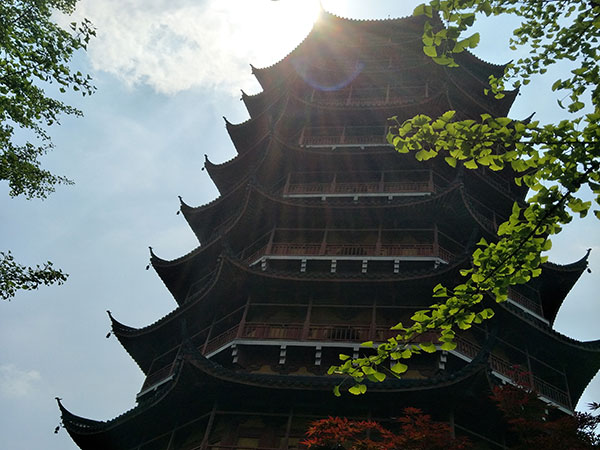
No.1918 Renmin Road, Pinjiang District, Suzhou, China
one of the landmark structures of Suzhou's ancient city.
North Temple Pagoda, also known as Beisi Pagoda or The Pagoda of Bao'en Temple, is a Chinese pagoda located inside Bao'en Temple in Suzhou, Jiangsu Province, China. With a total height of 76 meters (249 feet), the tower rises nine stories and was built in double eaves. Each storey has encircling eaves, balconies and banisters made of wood, while its base and outside walls are made of brick, the balustrades made of stone. The base of the pagoda is built in an octagonal frame.
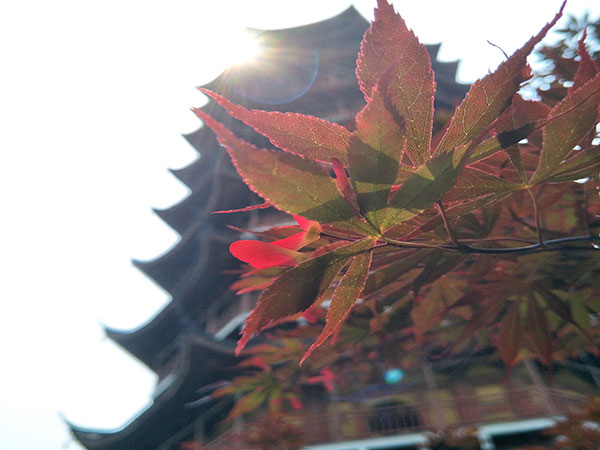
The North Temple Pagoda is one of the landmark structures of Suzhou's ancient city. And the Bao'en Temple is not only a Buddhist sanctuary with a long history but also hides a landscape garden behind its halls. This garden is small yet exquisitely designed, offering a very tranquil environment, while the main temple hall appears particularly solemn. It is a great place to escape the crowds and enjoy the peacefulness of autumn.
The pagoda is said to have first been built during the Three Kingdoms period under the order of Sun Quan, the king of Wu, who prayed for the happiness of his mother. The existing pagoda was constructed between 1131 and 1162 during the Southern Song Dynasty. And it retained many nuances from the earlier Sung Dynasty original. That makes it one of the more appealing and authentic timber and brick pagodas in Jiangsu.
It is worth climbing to the top for wide different views of old town and new town of the city. You can see Tiger Hill to one side and the skyscrapers outside the old town moat area on the other. There are also numerous old whitewashed Chinese houses in the surrounding area.
In the east of the pagoda, there is the Hall of Goddess of Mercy(Guan Yin), which was originally built in South Song Dynasty. The existing building we can see now was rebuilt in Ming Dynasty. It is the most intact architecture of Ming dynasty existing in Suzhou. There is a long corridor in the south of the hall, where displays the largest giant carved lacquer known as “Prosperous Suzhou ", which is 32 meters long and 2 meters high.
In the north stands Bronze Buddha Hall and scripture library, as well as a small garden with rockery, pool, pavilions and bridges. In addition, the Humble Administrator's Garden is quite closed to the pagoda, within walking distance. You can walk to visit to the garden before or after North Temple Pagoda tour.
The entire temple complex can be divided into five main sections: the Pagoda Courtyard, the Rear Courtyard, the Guanyin Courtyard, the Huazang World, and the Plum Garden. The central axis runs through the ornamental archway, the main gate, and the Pagoda Courtyard, creating a solemn and sacred atmosphere of an ancient Buddhist kingdom. In contrast, the Plum Garden is designed with elegant landscaping, where inscriptions and plaques are themed around plum blossoms. Interestingly, unlike many other Buddhist temples, the complex has neither a Heavenly Kings Hall nor a Mahavira Hall. Instead, visitors are greeted by a smiling Maitreya Buddha right after entering the main gate.
Upon entering, visitors may receive a complimentary stick of incense for prayer. At the center of the courtyard, in front of the pagoda, stands a large statue of the Maitreya Buddha carved from Jinshan stone. Behind it is a statue of the guardian deity Skanda, while further behind rises the magnificent nine-story, octagonal North Temple Pagoda itself.
To the north of the pagoda lies the Hall of Seven Buddhas, enshrining seven statues that symbolize gratitude to Buddhas and Bodhisattvas across the past, present, and future. Beyond this stands the Scripture Library, which houses a thousand-armed Guanyin statue and a vast collection of Buddhist texts. On the eastern side of the pagoda is the Guanyin Hall, also known as the Nanmu Guanyin Hall, the best-preserved Ming Dynasty wooden building in Suzhou. Nearby stands the Zhang Shicheng Stele, reportedly donated by the wealthy Yuan dynasty merchant Shen Wansan in honor of the rebel leader Zhang Shicheng.
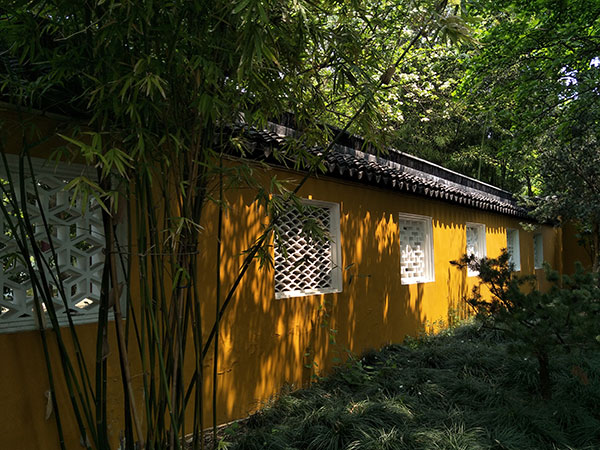
Continuing northwards brings visitors to the Plum Garden, a natural-style Chinese landscape garden. The garden features unique rockeries crowned with a pavilion, lush seasonal flowers, winding corridors, and flowing streams crossed by stone bridges. Its quiet and elegant setting makes it an excellent spot for photography and a peaceful retreat within the bustling city.
Recommended Route
Enter from the south gate and follow the main axis: start with the smiling Maitreya Buddha, continue to the statue of Skanda, then visit the North Temple Pagoda. From there, explore the Guanyin Hall and the Zhang Shicheng Stele, before finishing your visit with a stroll through the tranquil Plum Garden.
Visitor Notes
Some sections of the temple may be temporarily closed for restoration or religious ceremonies, so it is advisable to check the latest opening status before your visit. Please maintain silence and show respect for the sacred atmosphere of the temple.
Nearby Attractions
The North Temple Pagoda is conveniently located close to several major attractions. Within walking distance are the Suzhou Silk Museum, Suzhou Art Museum, Suzhou Museum, as well as the Humble Administrator’s Garden and Lion Grove Garden. These sites can easily be combined into a one-day cultural and sightseeing itinerary.
• Chinese name: 北寺塔
• Address: No.1918 Renmin Road, Pinjiang District, Suzhou, China
• Opening hours: 8:00am - 6:00pm. Ticket office is closed at 17:30. It is suggested to spend about 1 hour to tour in the place.
• How to get to North Temple Pagoda in Suzhou: Take 1, 2, 4, 313, 8, 502, 38, 101, 102, 103, 602 to North Temple Pagoda Station(北寺塔站).
With a total height of 76 meters (249 feet), the tower rises nine stories and was built in double eaves. Each storey has encircling eaves, balconies and banisters made of wood, while its base and outside walls are made of brick, the balustrades made of stone. The base of the pagoda is built in an octagonal frame.
As the tallest surviving ancient brick-and-wood pagoda in the Jiangnan region, the North Temple Pagoda embodies both the refined craftsmanship of Wu culture and the architectural principles of the Song Dynasty’s Yingzao Fashi (the official building standards of the time). The tower follows a nine-story, octagonal pavilion-style design, consisting of four structural parts: the outer wall, the surrounding corridor, the inner wall, and the central chamber. From each of the eight sides, wooden balconies project outward, with eaves extending gracefully and bronze wind-bells suspended at the corners. When the wind blows, the bells create a melodious sound that can travel for miles.
Inside the pagoda, a wooden staircase connects each level, allowing visitors to ascend gradually to the top and enjoy sweeping panoramic views of Suzhou—its classical gardens, ancient whitewashed houses, and the contrast of modern skyscrapers beyond the old city moat.
The construction of the tower demonstrates ingenious techniques. The central chamber and passageways employ brick structures that imitate traditional wooden dougong (interlocking brackets) and coffered ceilings. Notably, the bracket system above the doorway on the third floor is one of only two surviving examples recorded in the Yingzao Fashi, making it of exceptional historical importance. To balance the weight difference between the outer wall and the inner core, wooden planks were laid above the corridors on every level except the ninth floor. This clever design helped prevent uneven settlement, and remarkably, the pagoda has remained stable for more than 700 years.
The base of the tower is an intricately carved octagonal Sumeru pedestal. The waist section is decorated with statues of guardian deities, while the platform surface is adorned with swirling cloud motifs. These carvings are not only exquisite in artistic style but also rich in religious symbolism, reflecting the fusion of Buddhist faith and local artistry.
From $ 197
From on request
From $ 490

 English