Your China & Yunnan Travel Experts

 Ask a Question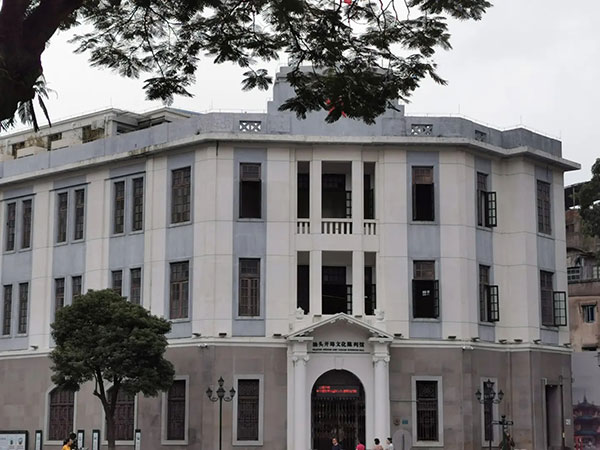
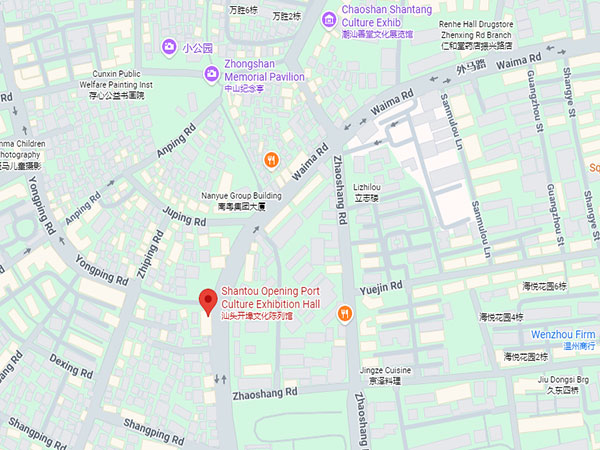
No.1 Yongping Road, Jinping District, Shantou, Guangdong Province, China
a cultural landmark
Located in the heart of Shantou’s historic Kaipu (Opening-up) area, directly opposite the iconic Customs Clock Tower, the Shantou Opening Port Culture Exhibition Hall offers a vivid glimpse into the city’s 150-year journey since its official opening as a treaty port on January 1, 1860. Housed in a three-story European-style building facing southwest to northeast, the museum blends Western architectural elegance with traditional Chaozhou elements, standing as a cultural landmark that reflects Shantou’s unique history, economic development, and urban culture.
The exhibition hall occupies a building originally constructed in 1907 as the Shantou branch of the Taiwan Bank, a Japanese corporation. At the time, the bank served as a major financial hub in Shantou, symbolizing the city’s growing connections with global trade networks. Over the decades, the building has witnessed pivotal moments in Shantou’s history. After the bank ceased operations, the building functioned as a hospital, newspaper office, and court. Following the city’s 150th anniversary of opening, the Shantou municipal government and Jinping District authorities restored the building and transformed it into a museum to preserve Shantou’s cultural and historical heritage. In 2016, the building was officially listed as a protected cultural relic by the Guangdong provincial government, recognizing its architectural and historical significance.
The exterior is complemented by three bronze statues placed on the front steps, each representing a distinct aspect of early 20th-century Shantou life. A street vendor selling traditional Chaozhou snacks depicts everyday local commerce. Dr. Shi Meiyu, China’s first female overseas student and a renowned medical doctor, symbolizes the city’s contributions to modern education and medicine. Finally, Joseph Jardine with his Chinese comprador reflects the active presence of Western trading houses and the city’s role in international commerce. Together, the statues offer a visual introduction to Shantou’s blend of Eastern and Western influences.
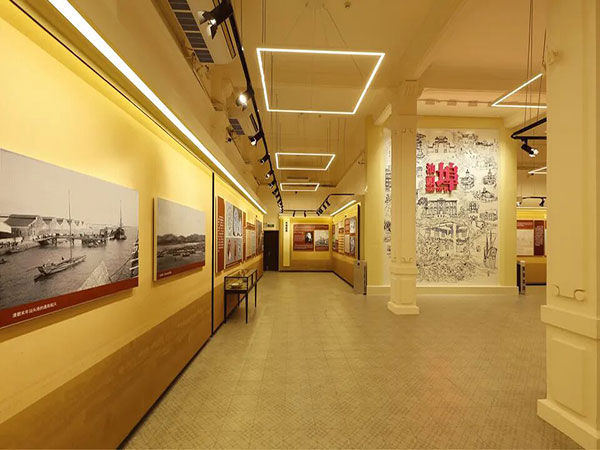
Visitors enter through a well-designed doorway, immediately greeted by the museum’s mascot, “Tuo Tuo,” named after Shantou’s alternate name, Tuo Island. The centerpiece of the first floor is the Opening-up Culture Mural, a massive work measuring 4.8 meters high and 4.2 meters wide. Crafted from embedded bricks in a monochrome sketch style, the mural captures 150 years of Shantou’s political, economic, and cultural evolution. It illustrates key events, important figures, architecture, and local life in a single, striking visual narrative.
The first floor also serves as a multifunctional exhibition hall, displaying historical documents, local artworks, and paintings by Shantou masters. Visitors can view a selection of rare calligraphy and paintings, offering a cultural complement to the historical content. The combination of historical documents and contemporary art creates a sense of continuity between Shantou’s past and present.
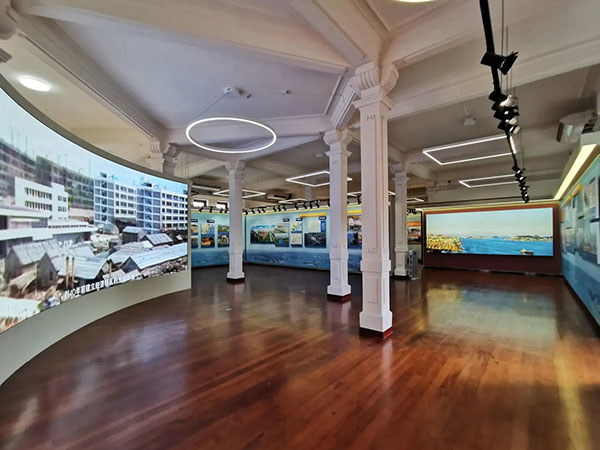
The second floor is the heart of the museum and houses the most extensive exhibits. The theme of this floor is “Let History Speak to the Present—Shantou Opening-up Symphony.” Vintage photographs of Shantou’s early opening period line the walls, accompanied by an inscription from Lingdong scholar Guo Mangyuan. Exhibits are organized into nine preludes, providing a detailed overview of Shantou’s evolution from its origins, the growth of the local economy, the emergence of national industries, and cultural developments during the early 20th century, including the vibrant intellectual and social scene from 1939 to 1945.
A highlight of the second floor is a scale model of Shantou from 1931, which provides a bird’s-eye view of the city’s streets, ports, and key buildings during the treaty port period. This model helps visitors understand the urban layout and economic geography of early Shantou.
The floor also features over 100 donated artifacts from local citizens and collectors. These include business licenses, old stock certificates, overseas remittance letters known as Qiaopi, photographs, pharmaceutical mortars, and antique rotary telephones, each telling a unique story about the city’s social and economic history. One particularly notable item is a rare copy of the Chao Yin Bible, annotated in Romanized Chaozhou script, which was originally created to help missionaries communicate with local residents. Together, these items provide a tangible connection to Shantou’s past.
The third floor, called Qingyin Pavilion, focuses on Chaozhou culture and modern development. Exhibits include traditional musical instruments such as the erxian, pipa, and gong, illustrating the richness of Chaozhou music. The museum also hosts cultural performances, workshops, and music salons on a rotating schedule, allowing visitors to experience the city’s living heritage.
Additionally, this floor highlights Shantou’s development as a Special Economic Zone after China’s reform and opening-up policies. Visitors can see how the city transitioned from a historically passive port into a proactive hub for trade, industry, and culture. This combination of historical exhibits and contemporary culture underscores Shantou’s ongoing evolution while celebrating its unique Chaozhou identity.
Nanao I Ship Ceramics: Recovered from a Ming dynasty shipwreck, these ceramics demonstrate Shantou’s long-standing role in maritime trade along the Silk Road.
Qiaopi and Financial Documents: Letters and remittance slips sent by overseas Chinese illustrate the deep connection between the Shantou diaspora and their homeland, and the role of commerce in shaping local culture.
Historical Artifacts and Literature: Items such as antique telephones, pharmaceutical tools, and the Chao Yin Bible offer insights into the daily life, religion, and commerce of the past.
These collections collectively allow visitors to explore Shantou’s rich commercial history and cultural heritage in a detailed and engaging way.
Best Time to Visit: Weekends provide longer opening hours, while weekday visits are quieter and allow for more focused exploration. Public holidays follow extended hours from 9:00–17:30.
Accessibility: The museum is easily accessible from the city center and is located near other attractions such as the Customs Clock Tower and Xiaogongyuan Park.
Guided Tours: Exhibits are in Chinese. Hiring a local guide or using translation apps can enhance the visitor experience.
Photography: Generally allowed, though flash photography may be restricted in certain areas to protect delicate artifacts.
Time Required: Plan for at least 1.5 to 2 hours to explore all three floors fully.

 English