Your China & Yunnan Travel Experts

 Ask a Question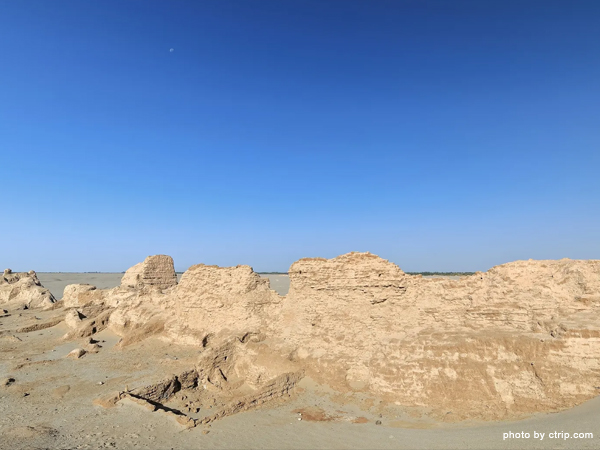
Ruoqiang County, Xinjiang, China
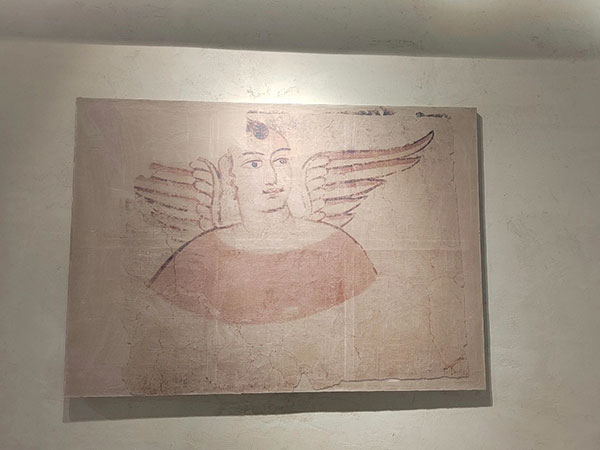
Site of the Milan Ancient City, the mural Winged Angel was found here
Milan Ruins is located in Ruoqiang County of Xinjiang, which used to be an oasis city in the Silk Road, the intersection of Lop Nor and Altun Mountain Ranges. In the past, it was a trade center of Silk Road and vital communication line of entering and leaving Central Asia. To avoid crossing the Taklamakan Desert and Tarim Basin, the merchant caravan often chose to bypass from the north and south sides of Milan. Milan Ruins consists of ancient architectural complex site of Wei and Jin Dynasties, Gushu Castle of Tang Dynasty and irrigation works and Yixun Ruins of Han Dynasty.
The ancient city of Milan ruins are located near Milan Town in the southern part of Hotan City, approximately 30 kilometers from the city center. The history of Milan City spans from the 2nd century BCE to the 8th century CE, a period when oasis cultures flourished along the Silk Road. Milan served as a crucial city under the administration of the Protectorate of the Western Regions in ancient times and functioned as a vital commercial hub connecting Central China with Central Asia.
As a key stop along the Silk Road, Milan was not only a trading center for merchants and nomadic peoples but also a crossroads for cultural and religious exchange. It served as a platform where Buddhist culture, Hellenistic influences, and Central Chinese traditions converged, leaving behind numerous precious artifacts and archaeological sites.
The ancient city of Miran lies on the edge of the Taklamakan Desert, surrounded by arid Gobi terrain and grasslands. Its geographic environment exhibits the typical characteristics of an oasis. Water sources for the oasis come from nearby rivers and groundwater, enabling the ancient city of Miran to sustain thriving commercial activities.
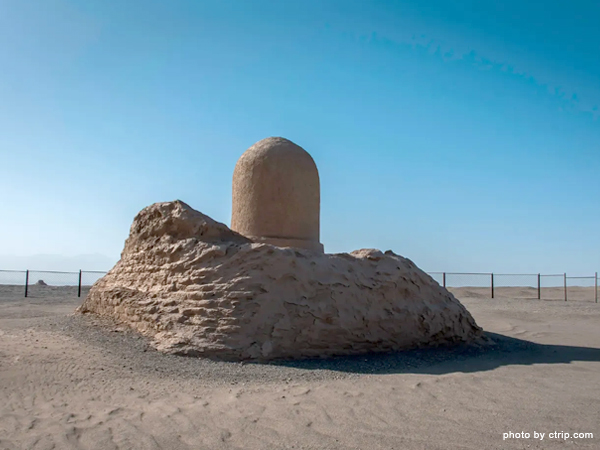
The architectural style and layout of the ancient city bear a strong Western Region influence. Among the most distinctive architectural remains are the city walls, pagodas, and temples. Most structures in Milan Ancient City employed rammed earth and brick-stone construction, featuring sturdy walls with strong resistance to wind and sand. The pagoda ruins showcase the architectural style of Buddhist structures from that era, their presence also attesting to Buddhism's significant status within the ancient city.
Additionally, palace and market ruins remain within the city walls. The layout of these architectural sites reflects the economic and social structure of the city at that time. Excavations of the market area have provided archaeologists with insights into the commercial activities and the flourishing market transactions of the era.
The Dongdasi Temple is another representative building in the Milan Ruins. It is divided into two floors, with a higher courtyard wall on the periphery. There is a niche for a statue of the Buddha(12*0.6*2.4METER) in the Dongdasi Temple. Statues of Bodhisattva and Heavenly kings were put in the niche for a statue of the Buddha, and there are also floating sculptures of cirrus cloud stigmas around them, Under the buildings on the east side of the ruins of the Buddhist temple, there are still large statues of Buddha statues and a large Buddha head abandoned on the ground. Dongda Temple is the famous ancient Chinese monk Xuanzang who experienced the Buddhist temple in the ancient city of Ruogiang Milan on his way to Tianzhu in the west, and taught the Dharma and worshiped Buddha. Qiang Milan Ancient city Buddhist Temple, and preached the Dharma and worshiped Buddha.
During the Milan Period, there are mainly two types of buildings, adobe masonry and rammed earth. The residual height of the pagoda is about 3-6 meters. The width of the basis is is about 4-10 meters. And the top of the pagoda is arched. Most of them have been broken. A mural of a Winged Angel has been unearthed at the site of Xidasi Temple of Milan Ruins. This site is a relatively well-preserved important relic of Han and Tang Dynasties in Xinjiang. The site of Milan was announced as an autonomous region-level cultural relics protection unit in 1984. In 2001, it was unearthed around the Xidasi Temple. In 1906, the British explorers Stein found many exquisite Buddha Heads, Brahmi Remnants and other precious cultural relics. The frescoes of Winged Angels found from the outer walls of the cloisters of M3.
The ancient Fortress Ruins in Tang Dynasty are near Milan River. It is an irregular square with a width of 56 meters from north to south and a length of 70 meters from east to west. There are watchtowers in the four corners and gates in the west. The ancient Fortress Ruins are low in the middle, with a large step slope in the north. Houses are built from the bottom of the slope to the top of the slope in turn. The houses are flat-topped, the lower part is dug in the soil, and the upper part is made of adobe. A large number of Tibetan wooden slips, Tibetan documents and Tang Dynasty pottery pieces have been excavated here, leaving a lot of historical research materials for modern archaeology.
The ancient city ruins of Milana are located approximately 30 kilometers from downtown Hotan, taking about 40 minutes by car. As a major transportation hub in Xinjiang, Hotan offers multiple ways to reach the Milana ruins
Driving
If you possess sufficient driving experience and familiarity with local road conditions, driving yourself to the Milana Ruins is an option. The road from Hotan City to Milana Town is relatively flat with decent traffic conditions. The advantage of driving is flexibility—you can freely plan stops and routes while enjoying the beautiful natural scenery along the way.
However, since local roads are straightforward, it's advisable to prepare detailed navigation maps beforehand and ensure your vehicle is in good working order.
Chartered Vehicle Service (Recommended)
If you are unfamiliar with local traffic or prefer greater comfort and convenience, booking a chartered vehicle through a travel agency is an excellent option. Many agencies offer chartered services from Hotan City to the ancient city of Milan, typically including:
Joining a Tour Group
Some travel agencies offer day trips around Hotan or Silk Road cultural tours. These group tours typically arrange transportation from Hotan to the ancient city of Milan. Group travelers can meet at designated times and locations, following the agency's itinerary to visit Milan and its surrounding historical sites. Such tours usually include transportation, a guide, lunch, and other services, making them ideal for visitors seeking a relaxed way to explore local history and culture.
From $ 521

From on request

From on request

 English