Your China & Yunnan Travel Experts

 Ask a Question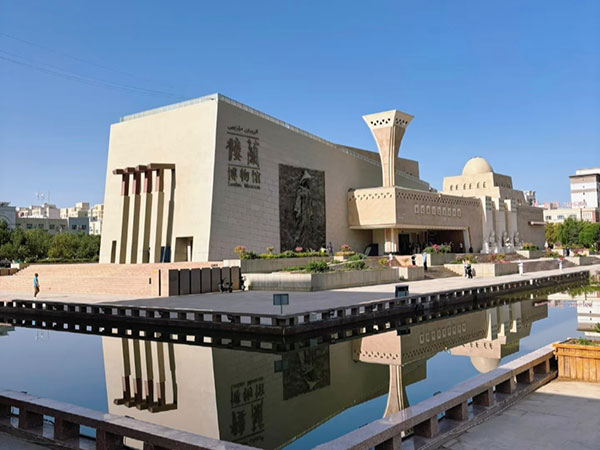
Unity Cultural Square, Xingfu Road, Ruoqiang County, Xinjiang, China
The only museum with the theme of Loulan culture
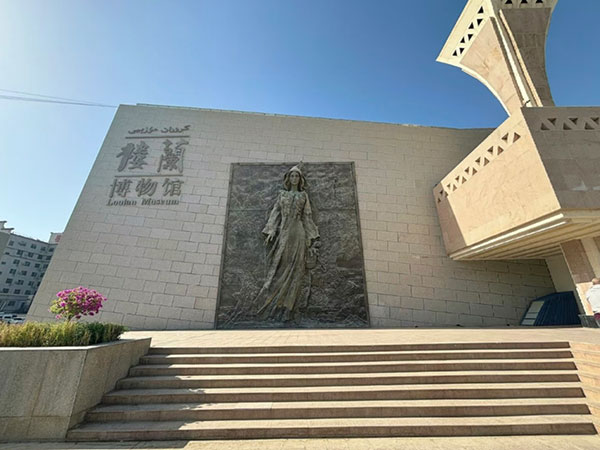
Loulan Museum is located in Unity Cultural Square, Xingfu Road, Ruoqiang County, Xinjiang, China. It is a landmark building reflecting the history of Loulan and the reality of Ruoqiang. There are Prehistoric Exhibition Hall, Loulan Historical and Cultural Exhibition Hall, Secret Ruoqiang Exhibition Hall, Vicissitudes Memory Hall and Voice of History Hall in the Loulan Museum, with detailed historical materials, modern design and various forms. At present, there are 5,717 pieces of cultural relics in Loulan Museum, mainly mummified specimens of wood, pottery and bronze, including 6 first-class cultural relics, 17 second-class cultural relics and 64 third-class cultural relics, which were unearthed in Loulan ancient tomb, Loulan ancient city, Milan Ruins, Lop Nur South ancient city site and Xiaohe cemetery. Mummy specimens include 8 mummies of adults and children unearthed from Loulan Ruins and Xiaohe cemetery. The cultural relics most representative of Loulan culture are leather boots, brocade, straw baskets, pottery and wooden slips from Milan Ruins collected from Loulan ancient tomb.
The museum is located in Ruoqiang County, not far from the town center.
A normal visit takes approximately 1.5–2 hours. If you are particularly interested in archaeology and history, you can allow 2–3 hours.
It is recommended to visit in the early morning or afternoon to avoid the hottest part of the day.
The beauty body discovered in Loulan Museum was unearthed in Loulan Tomb. She was about 25 years old and was about 1.65 meters tall before her death. She was wrapped in cotton and linen fabric, and her skin was slightly elastic, with delicate features, obvious lip line and curled eyelashes. Feathers are inserted into the white felt hat, and leather boots are worn on the feet. The leather soles are cut from a whole piece of leather to sew boots and boots. The center of the boot is stitched with two strips with fur, which are wound around the boots. The center of the boot is painted with a red line, on which several feathers are worn, and fur can be seen inside the boot. When unearthed, experts found that this woman's abdomen bulged, so experts speculated that this beautiful woman's body discovered that she died in childbirth, but her facial expression was very peaceful.
Loulan is at the crossroads of the Silk Road. Loulan is an important transportation hub connecting the China and the Western Regions. Therefore, the traffic line connecting Dunhuang and the Western Regions(the main channel of the east and west of Loulan) is called Loulan Road. In the Western Han Dynasty, Loulan Road also became the only traffic trunk line connecting China and the Western Regions. Loulan Road in Cao and Wei Periods still has an important position. From Wei and Jin Periods to Qianliang Period, Loulan's economy and trade were very prosperous, and it was still the transportation hub of east and west. In 376AD, Loulan Road gradually lost its function as a traffic trunk line, but it was not completely interrupted. Loulan Road was basically abandoned until the end of Sui Dynasty. Loulan, as an important town of the Silk Road, the communication between the East and the West brought about the spread of art and culture, and the collision of civilizations made Loulan culture and art change in the times, creating the moderns of Loulan culture and art, which is undoubtedly an immortal milestone in the history of artistic communication between the East and the West.
History and Geography of Loulan
The exhibition begins by examining the geographical location and natural environment of the ancient kingdom of Loulan, systematically introducing the changes in the water systems, oasis distribution, and climatic evolution of the Lop Nur region. Through historical records and environmental analysis, it reveals the natural foundations of Loulan's rise and the environmental backdrop of its decline, providing key clues to understanding “why Loulan vanished.”
The Silk Road and Loulan Civilization
This section highlights Loulan's pivotal role along the Southern Silk Road, illustrating its function as a vital transportation hub connecting the Central Plains, the Western Regions, and Central Asia. Through textual records and archaeological discoveries, the exhibition reveals the exchange and fusion of diverse civilizations within Loulan, underscoring its pivotal significance in ancient East-West connections.
Excavated Artifacts and Archaeological Findings
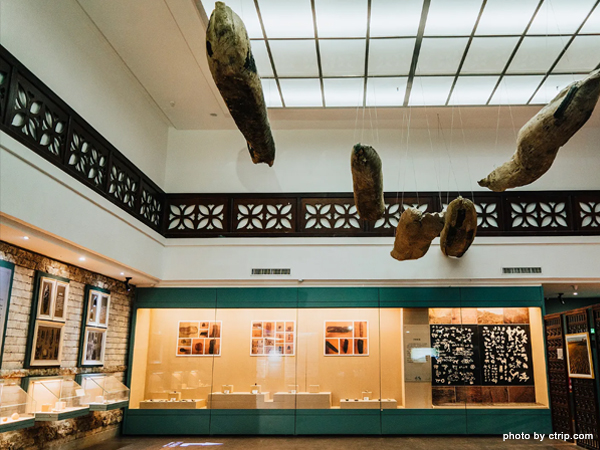
This section, the museum's most information-dense area, primarily displays archaeological discoveries related to the Loulan site. Exhibits include replicas of pottery, wooden objects, and textiles, accompanied by text and images detailing the excavation process, research methodologies, and academic significance. This helps visitors gain a more intuitive understanding of the lifestyle and material culture during the Loulan period.
The Loulan Beauty and Mummy Culture
Regarding the widely discussed “Loulan Beauty” and mummy archaeology in Xinjiang, the museum adopts a science-popularization and academic approach to presentation. The focus lies on the conditions for mummy preservation, the background of archaeological discoveries, and their research significance. The overall presentation style is relatively restrained, aiming to guide visitors toward understanding this unique archaeological phenomenon from scientific and historical perspectives.
⚠️ Important Safety Notice
Please note that the core protected areas, including the Loulan Ancient City and Xiaohe Cemetery, are located in the Lop Nur uninhabited area, which are national-level cultural relics protection units and military control zones, and are not open to individual tourists. Any unlicensed guides claiming to be able to bring people in privately pose significant safety and legal risks. Always seek out compliant adventure tours through reputable travel agencies.
From $ 521

From on request

From on request

 English