Your China & Yunnan Travel Experts

 Ask a Question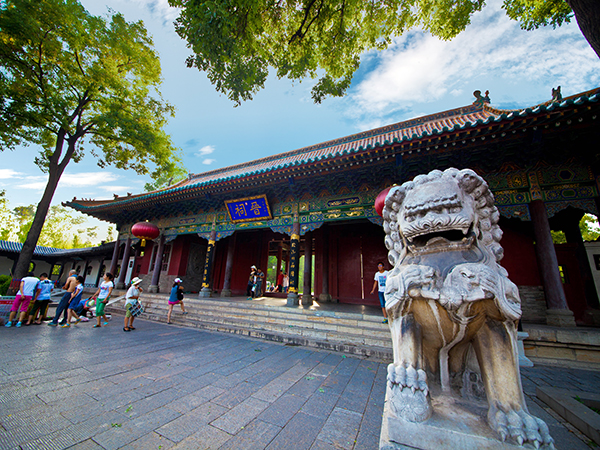
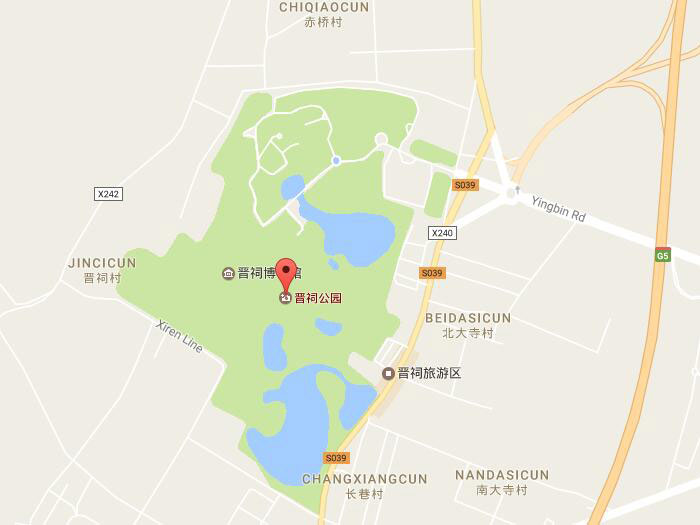
Jinci Town, Jinyuan District, Taiyuan, Shanxi Province.
Wonderful garden with long history.
Jinci Temple is situated in the southwestern Taiyuan, Shanxi Province, China. There are more than 10 ancient architectures in this temple. And the quiet environment, charming scenery, marvelous buildings, and the lively article statures make Jinci Temple become famous in the world for decades of years. It is a historic relic integrating gardening art, carving art and stele stones art.
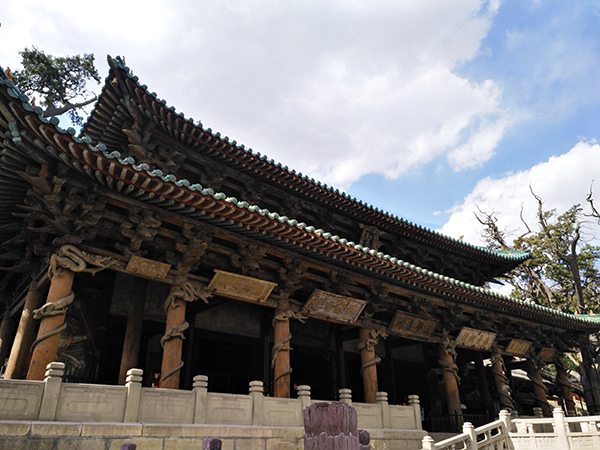
Jinci Temple was founded about 1,400 years ago and expanded during the following centuries, resulting in a diverse collection of more than 100 sculptures, buildings, terraces, and bridges. The best known structure at Jinci is the Hall of the Holy Mother, which was constructed in 1032. It has carved wooden dragons coiled around the eight pillars that support its upward-curving double-eave roof. The complex includes a classical garden with a 3,000-year old cypress dating from the Zhou Dynasty. Next to Jinci is the Wang Family Hall, a private villa built in 1532 for Wang Qiong, a high ranking official during the Ming Dynasty.
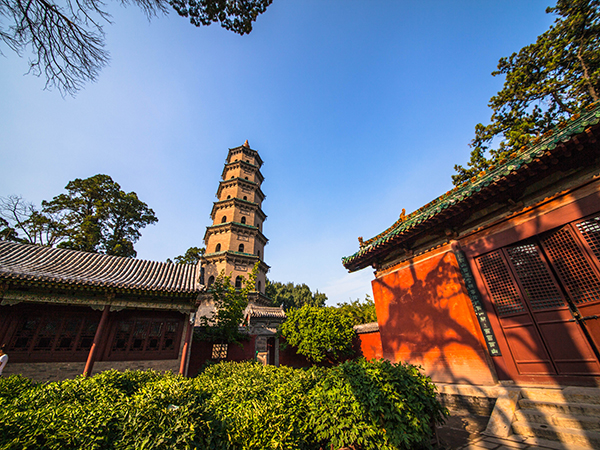
The main buildings are distributed along the central axis from east to west. They are the Shuijing Platform, the Huixian Bridge, the Jinren Platform, the Duiyue Hall, the Bell and Drum Towers, the Xian Hall, the Yuzhao Feiliang (Fish Pond and Flying Girder) Hall and the Shengmu (Goddess Mother) Hall. North to them are the Shuyu Temple, the Wutianshen Temple and the Wenchang Hall; south to them are the Shuimu Hall, the Nanlao Spring Pavilion and the Sheli Shengsheng Tower. All the buildings are in compact and strict structures of a temple in a sense, but it is also an imperial garden from another perspective. The cypresses grown in the Zhou Dynasty and pagoda trees of the Sui Dynasty (581-617) are still vigorous, lush and green. Despite the trials and hardships of thousands of years, their old branches form a crisscross network and are reputed with the restless the Nanlao Spring, wonderful portraits of the maids in the Song Dynasty (960-1279) as three matchless works in the Jinci Temple.
Figures of Maidservants
There are 43 figures of maidservants at the Shengmu Hall. The statues are lifelike with vivid emotions. And the figures of maidservants have different jobs and characters. From these colored sculptures, you can know about the life in the court, clothing and colored sculpture art of the Northern Song Dynasty, .
The Zhou Cypress
The Zhou Cypress in the Jinci Temple has a long history of over 3,000 years, whose history can be traced back to the Western Zhou Dynasty. The shape of the Zhou Cypress looks like a reclining dragon, which is also called Reclining Dragon Cypress. And famous poet of Song Dynasty Ouyang Xiu once wrote poem to describe the cypress in the Jinci Temple.
The Never Aging Spring Pavilion
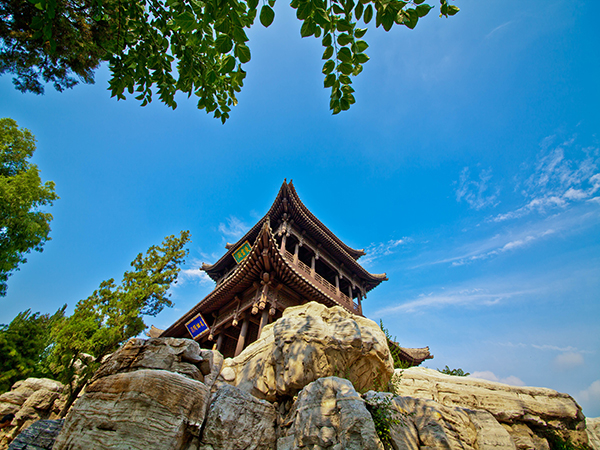
There is a spring at the Never Aging Spring Pavilion called Never Aging Spring. The water of the Never Aging Spring is clear. And famous poet of China, Li Bai wrote poem about this spring. And the Never Aging Spring is called the First Spring in the Jinci Temple. You can also admire the architectural design of the Never Aging Spring Pavilion. There is a famous plaque at the Never Aging Spring Pavilion.
Shengmu Hall is the main hall of the Jinci Temple. Shengmu Hall is the representative of the architectures of Song Dynasty. The Shengmu Hall was built in Northern Song dynasty. And the eight woodcarvings of a dragon entwining around the pillar is the earliest existing woodcarving in China. At the Shengmu Hall, you can know about the architectural art of ancient China and the development of the ancient architectures.
Shuijing Terrace is the first building you meet after entering the Jinci Temple. Shuijing Terrace is the opera stage. Every year, the temple fair of Jinci Temple is held at the Shuijing Terrace. And the plaque in the Shuijing Terrace is the one of the highlights of the plaques at the Jinci Temple.
Duiyuefang is the only way which must be passed if you want to get to the Shengmu Hall at the axis. And there is a famous plaque at the Duiyuefang, which is one of the three most famous plaques at the Jinci Temple. The Duiyuefang was built in 1576, with a history over 400 years.
The best time to visit Jinci Temple is spring and autumn with pleasant weather. In spring, the flowers in the Jinci Temple are blooming, which make the Jinci Temple more attractive. In autumn, the weather is cool and comfortable, which is suitable for outdoor activities. The ginkgo tree leaves turn yellow in autumn, which make the Jinci Temple more beautiful. Generally speaking, summer is the peak season of Jinci Temple, there will be many tourists in Shanxi Province. And if you want to avoid the crowds in Shanxi, you can visit Jinci Temple from November to March.
Jinci Temple is located about 27 kilometers from Taiyuan downtown, and you can take taxi to the Jinci Temple from Taiyuan downtown.
Flight
Jinci Temple is about 30 minutes’ drive from the Taiyuan Wusu Airport.
Train
If you arrive at the Taiyuan Railway Station(太原站), you can take Bus 308, 804, 856 to get to the Jinci Temple.
If you arrive at the Taiyuan South Station(太原南站), which is about 30 minutes’ drive to the Jinci Temple.

 English