Your China & Yunnan Travel Experts

 Ask a Question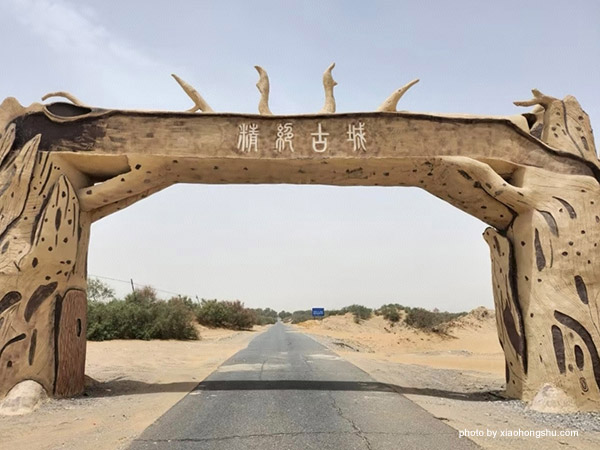
Hotan, Xinjiang Uygur Autonomous Region
Ruins of ancient Jingjue Kingdom, where the brocade armguard called Wu Xing Chu Dong Fang Li Zhong Guo unearthed
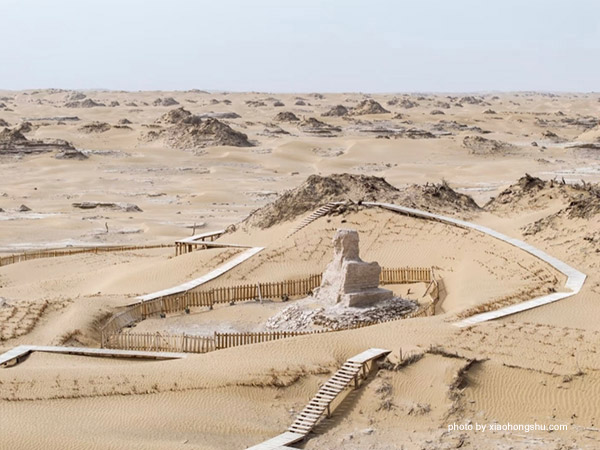
Niya Site is located in the southern edge of Taklimakan Desert, about 100 kilometers north of Minfeng County, Hotan, Xinjiang Autonomous Region, in the lower reaches of Niya River. With the Buddhist pagoda as the center, Niya Site extends 25 kilometers from north to south and 5 to 7 kilometers from east to west, and there are about 100 houses, yards, cemeteries, pagodas and other relics scattered.
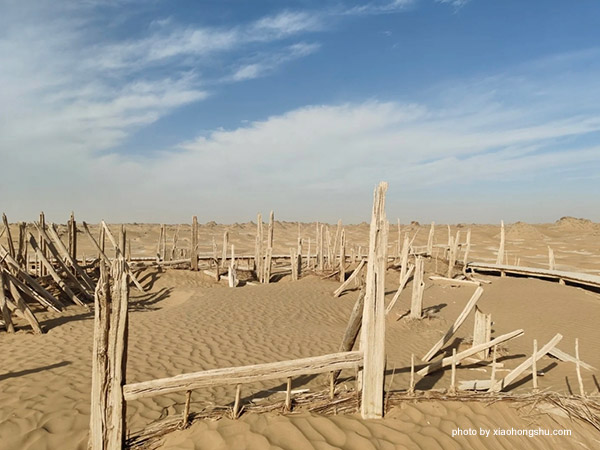
In this long and narrow area, Buddhist temples, houses, cemeteries, farmland, forests, canals and smelting sites are scattered all over the place. From the remaining buildings and cultural relics, we can still feel the prosperity of the country.
Archaeological value: Niya site is one of the largest ancient cultural sites in Xinjiang, which is well-preserved and with great academic research value. Through the study of all kinds of relics and cultural relics in the site, archaeologists can deeply understand the architectural style, technology and agricultural production in Xinjiang during the Han and Jin Dynasties. For example, the exquisite silk unearthed, with its complex organizational structure, gorgeous colors and complicated patterns, showed superb textile skills at that time, and also reflected the close economic and cultural exchanges between Jingjue Country and the Central Plains.
The Niya Site, located in Minfeng County and Taklimakan Desert in Hotan area of Xinjiang Uygur Autonomous Region, was the ancient site of the Jingjue Kingdom in the Han and Jin Dynasties. The national first-class cultural relic brocade armguard called Wu Xing Chu Dong Fang Li Zhong Guo unearthed here is regarded as one of the greatest discoveries in China archaeology in the 20th century.
There are fields, courtyards, cemeteries, Buddhist pagodas, ditches, pottery kilns and other sites in the Niya site, and various cultural relics such as coins, utensils and wooden slips have been unearthed. Cultural relics have witnessed the governance of the Central Plains Dynasty over the Western Regions, and confirmed the exchanges and exchanges between ethnic groups in Xinjiang and the Chinese cultural identity, which is the epitome of the pluralistic and integrated pattern of the Chinese nation.
Although the Kingdom of Jingjue is described as a “small kingdom” in the *Book of Han*, its status in the Western Regions was by no means determined solely by its population. It was located on the alluvial plain along the lower reaches of the Niya River, on the southern edge of the Taklamakan Desert. From the 2nd century BCE to the 4th century CE, this region was not the vast expanse of sand it is today, but a lush oasis nourished by the Niya River. As a key stop along the Southern Route of the Silk Road, the Kingdom of Jingjue served as a “transit hub” and “intelligence center.” Traveling merchants would stop here to rest, change camels, and replenish their supplies of fresh water and food, while also bringing rare treasures from both the East and the West.
The lifestyle of the Jingjue people reflected a high degree of cultural integration. Archaeological excavations reveal that they had a developed agricultural system, with a crisscrossing network of irrigation canals used to cultivate grapes, pomegranates, and grains. Even more intriguing is their social management system: excavated wooden slips inscribed with Kharosthi script indicate that the Kingdom of Jingjue possessed a comprehensive legal framework and a spirit of contractual integrity, covering land transactions, marital disputes, and even severe penalties for tree felling. This reverence for the environment reflects the survival wisdom of oasis civilizations under harsh natural conditions. Architecturally, the Jingjue royal family and nobility resided in courtyards with “wooden frames and mud walls,” featuring exquisite fireplaces and carved wooden furniture. This region was not only a major trading hub along the Silk Road but also a cultural high ground where diverse religions (such as Buddhism and indigenous beliefs) and artistic schools converged. The existence of the Kingdom of Jingjue proves that even in the driest regions of the Asian interior, humans can create a brilliant civilization through sophisticated irrigation systems and trade networks.
The disappearance of the Kingdom of Jingjue is one of the most fascinating mysteries in the archaeology of the Western Regions. Around the end of the 4th century AD, this kingdom seemed to “vanish” from the annals of history overnight. The most widely accepted explanation is an ecological disaster. The Niya River, the lifeblood of the Kingdom of Jingjue, relied primarily on meltwater from the glaciers of the Kunlun Mountains for its flow. As the climate periodically became drier, coupled with vegetation destruction caused by excessive human cultivation, the river’s flow decreased year by year, eventually shrinking and changing course. Deprived of their water source, the people of Jingjue were forced to migrate upstream. Former farmlands were covered by shifting sands, orchards withered, and bustling markets were ultimately buried beneath silent mounds of tamarisk sand.
However, certain details uncovered at the archaeological site suggest a far more dramatic “moment of demise.” In many house ruins, archaeologists found grain still in the granaries, tapestries left unfinished, and even guard dogs tied to posts. This sense of a hasty departure has led researchers to speculate that the Kingdom of Jingjue may have faced a sudden military threat or political upheaval. At that time, the Western Regions were in turmoil, with powerful states like Shanshan (Loulan) constantly annexing smaller nations. Caught in the power struggles of various factions, the Kingdom of Jingjue may have been forced to migrate en masse after a devastating military invasion, leaving behind a complete, deserted city. Over the following millennium, the shifting sands of the Taklamakan Desert served as a natural “protective shell” for this ancient city, preserving slices of life from the Han and Jin dynasties beneath the dry sand layers. It was not until Stein’s arrival in 1901 that this key—buried by wind and sand for 1,500 years—reopened the gateway to the Jingjue civilization, allowing the awe-inspiring “Pompeii of the East” to be revealed once again to the world.
With Taklimakan Desert in the north and Kunlun Mountains in the south, Jingjue Country depends on the water source of Niya River for survival. Jingjue Country accepted the jurisdiction of the Han Dynasty.
During the Han Dynasty, the Jingjue Country reached its peak by virtue of the Silk Road. However, after the 3rd century AD, this prosperous country suddenly disappeared, leaving only the ruins of Niya buried by the wind and sand. In 1901, when British explorer Stein secretly excavated cultural relics in Xinjiang, he accidentally discovered the ruins of this ancient city, and unearthed a large number of precious cultural relics such as wooden slips, Han bamboo slips and textiles. Stein's discovery shocked the world, and the Niya site entered the world archaeological field of vision.
At the Niya site, more than 1,000 pieces of Qulu language wooden slips have been unearthed, covering medical, religious, legal, trade, cultural and other aspects of social life. Medically, ancient Indian and ancient Greek medical technologies were spread here. Literally, the culture and art of ancient India and ancient Greece are deeply loved by some poets in the western regions. Religiously, the Jingjue Country is a key node in the spread of Buddhism to the east, and Buddhism has an important influence on the daily life of local people. In agriculture, local residents learned the techniques of farming, irrigation and sericulture reeling in the Central Plains. In business, there are many kinds of goods here, and trade is developed.
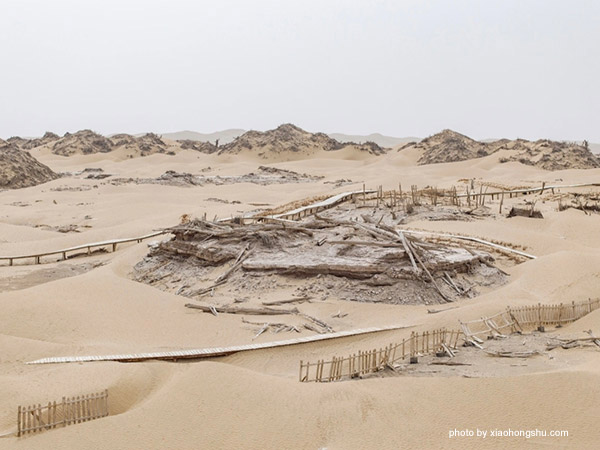
The best time to visit Niya Site is April to October, and April to May and September to October is most recommended to visit the Niya Site. During these time, the temperature is comfortable with lesser winds and sands. And if you plan to visit Niya Site in summer, please get prepared for the heat in the desert. To visit Niya Site, please check the weather forecast in Hotan in advance and prepare enough things.
From $ 521
From on request
From on request

 English