Your China & Yunnan Travel Experts

 Ask a Question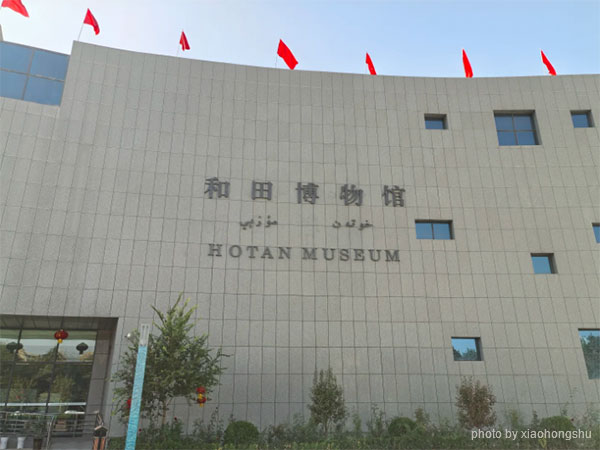
No. 1 Kunlun Road, Hotan City, Hotan Prefecture, Xinjiang Uygur Autonomous Region, China.
Explore the Silk Road’s soul at Hotan Museum. Discover legendary Niya textiles and rare artifacts bridging ancient Western and Chinese civilizations.
The Hotan Regional Museum, located in Hotan City, Xinjiang, is an important venue showcasing the civilization of southern Xinjiang along the Silk Road. Its predecessor was a cultural relics management office established in 1979. It officially became a museum in 2001 and moved to its new location in 2020 with assistance from Beijing. Today, it is a national second-class museum and a national 4A-level tourist attraction. Its establishment aims to protect and research Hotan's rich historical relics, inherit the culture of the Silk Road and the Western Regions, and showcase the history of interaction, exchange, and integration among various ethnic groups.
The museum houses nearly 10,000 cultural relics and features special exhibition halls on Hotan's history and culture, the Niya Ruins, and more. Here, visitors can admire precious artifacts such as Han Dynasty brocade, ancient mummies, Khotanese documents, Buddhist art, and jade artifacts, systematically showcasing the civilization of Hotan from ancient times to the modern era. It is a must-visit destination for understanding the history of the Western Regions and the culture of the Silk Road.
Hetian Regional Museum has witnessed over 40 years of development, dedicated to preserving and inheriting the Silk Road civilization in Hetian. It evolved from a simple exhibition room into a modern comprehensive museum. Its predecessor, the Hetian Regional Cultural Relics Administration Institute founded in 1979, was responsible for investigating, collecting, preserving cultural relics and conducting basic research locally, laying a solid foundation for the establishment of the museum. In 1981, based on the accumulated cultural relics, the Hetian Cultural Relics Exhibition Room was set up, displaying collections on a small scale and starting to spread Hetian’s history and culture to the public.
In May 2001, the Institute officially added the plaque of "Hetian Regional Museum", marking the formal establishment of the museum as an independent institution. In October 2005, the old museum on Beijing West Road opened to the public, with a construction area of 3,400 square meters, including multiple exhibition halls and an underground warehouse. It housed more than 9,000 cultural relics and became an important cultural window in southern Xinjiang. Later, it was successively rated as an Autonomous Region-level Patriotic Education Base and Youth Science and Technology Education Base.
The old museum closed in 2019 for relocation and renovation. With assistance from Beijing, the new museum opened on Kunlun South Road in Hetian in May 2020, with a total construction area of 13,493 square meters and significantly expanded exhibition space. Since then, the museum has developed rapidly: it was rated as a National 4A-level Scenic Spot and a National Third-Class Museum in 2020, its core exhibition won the Top Ten Exhibition Awards of National Museums in 2021, and it was promoted to a National Second-Class Museum in 2024. Now it has become an important landmark showcasing Hetian’s history, the Silk Road civilization and the integration of multiple ethnic groups.
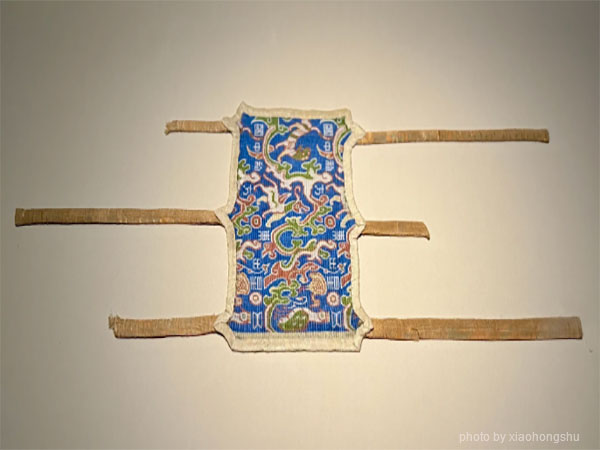
Unearthed from the Niya Ruins in 1995, this is a masterpiece of Han Dynasty weaving (the original is housed in the Xinjiang Museum). Measuring 18.5 cm long and 12.5 cm wide, it utilizes a five-color silk warp-patterned technique to weave the seal script characters "Five Stars Rise in the East, Benefiting China", interspersed with auspicious motifs like phoenixes, white tigers, and Pixiu (mythical protectors). More than just a pinnacle of Han textile technology, it serves as direct physical evidence of the deep political and cultural ties between the Central Plains dynasties and the ancient Kingdom of Jingjue, standing as an iconic symbol of Silk Road civilization.
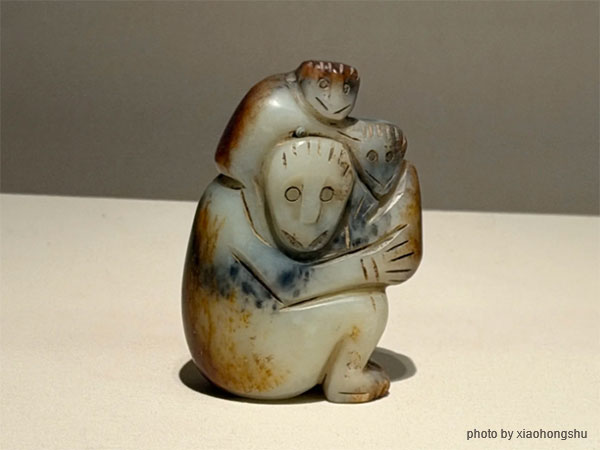
Standing 7.6 cm high and 5 cm wide, this piece is carved from top-tier Hotan white jade featuring natural greenish-red "skin" tones. The sculpture depicts a mother monkey sitting sideways, cradling one infant while another playful baby monkey perches on her shoulder. The fine incised lines representing fur create a lifelike appearance. Symbolizing "Succession of Noble Rank" (Beibei Fenghou), experts believe it was crafted by artisans from the Central Plains. It is a precious artifact demonstrating the fusion of Tang Dynasty carving techniques with Western Region aristocratic aesthetics.
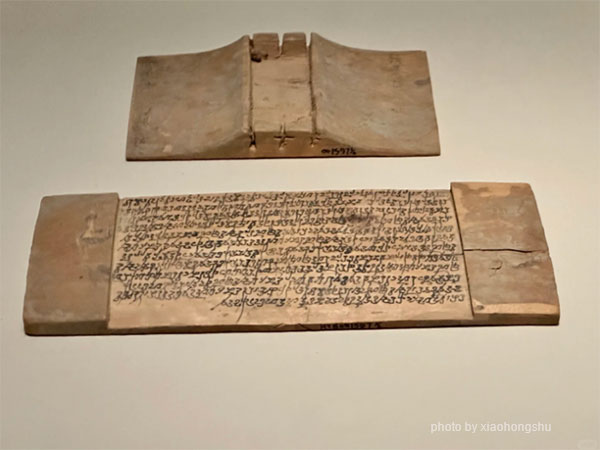
These official and private documents from the Han and Jin Dynasties (approx. 2nd–3rd Century AD) were mostly crafted from pine wood. The Kharosthi script inscribed on them was the lingua franca of the ancient Western Regions. Content ranges from sales contracts and debt disputes to divorce rulings and daily civil records. These tablets offer a vivid reconstruction of the social structure, legal customs, and ethnic relations of the Niya oasis city-states, serving as primary source material for studying the ancient social history of the Silk Road.
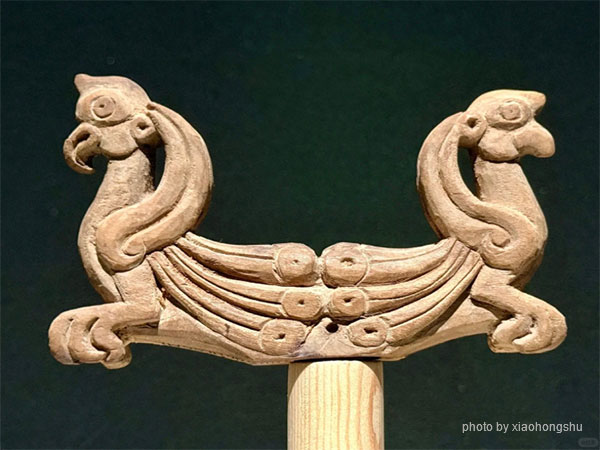
Unearthed from the Shanpula Cemetery in Lop County, this is a signature element of the Hotan Museum. This three-dimensional carving features two birds positioned back-to-back with joined bodies, with relief details highlighting their eyes and plumage. The imagery of linked double-headed birds is a common motif in both Indian Buddhism and Chinese mythology. This piece harmonizes Central Asian artistic styles with Eastern cultural symbols, representing a unique artistic legacy of the "Hu-Han" (nomadic and Han Chinese) cultural fusion along the Silk Road.
The Hotan Museum's collection encompasses a wealth of information on Western Regions history, Buddhist archaeology, and ancient textile technology. Standard QR code translations often fall short of conveying its cultural depth.
Recommended Xinjiang Tour to Hotan: 11 Days Tour of Desert Highway in Xinjiang
(Destination: Urumqi-Turpan-Korla-Minfeng-Hotan-Kashgar-Urumqi)
From $ 521

From on request
From on request

 English