Your China & Yunnan Travel Experts

 Ask a Question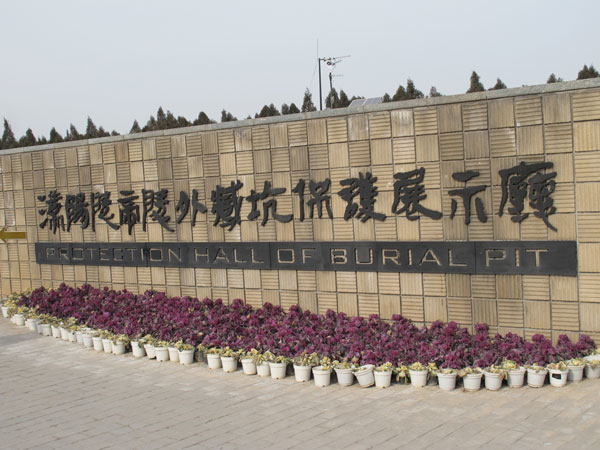
East Section of International Airport Line, Weicheng District, Xianyang, Shannxi Province, China
The burial place of Emperor Jing, the fourth emperor of the Western Han Dynasty and his Empress Wang; Perfect place to learn the culture of Han Dynasty
Hanyang Mausoleum, also called Yang Mausoleum, located in Xianyang City in Shaanxi Province, is the multi-burial cemetery of Emperor Jing of Han and his queen. The tomb was built from 153 BC to 126 BC, covering an area of 20 square kilometers. The Hangyangling Museum has been established, which is a large-scale cultural tourism scenic spot mixing the modern technology, ancient civilization, history, culture and landscape together. It is the largest museum with largest floor space in China.
Basic Information
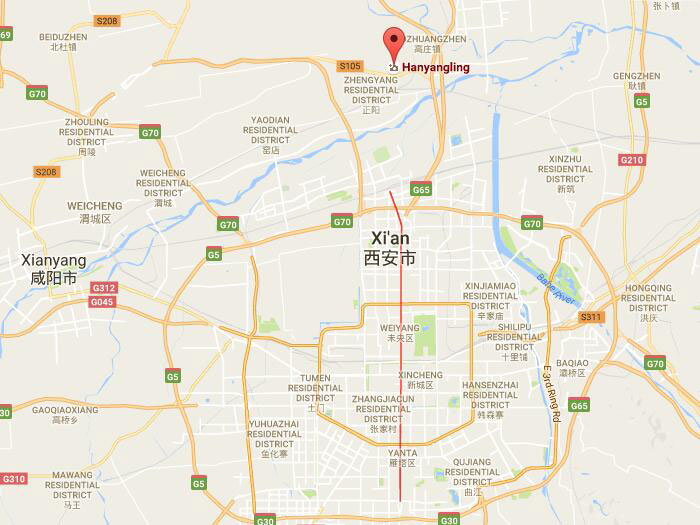
· Geographical Location: Situated at the eastern end of the Xianyang Plateau, on the northern bank of the Weihe River, the mausoleum extends across Weicheng District and Jingyang County of Xianyang City, as well as Gaoling District of Xi’an City. It borders Changling Mausoleum of Emperor Gaozu of Han on the west and reaches the confluence of the Jing and Wei Rivers on the east. The entire area stretches about 10 kilometers from east to west and 1–3 kilometers from north to south, covering nearly 20 square kilometers.
· Construction Period: The mausoleum was built in 153 BC and completed in 126 BC, taking a total of 28 years.
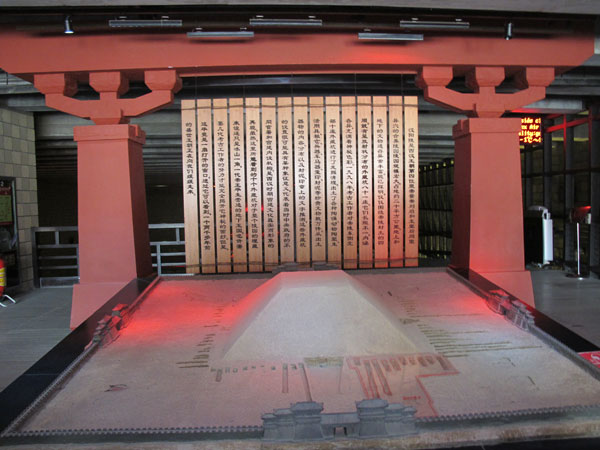
· Layout: The mausoleum complex mainly consists of the Emperor’s tomb, the Empress’s tomb, the southern and northern burial pits, ceremonial buildings, satellite tombs, tombs for convicts, and the ancient city of Yangling. The Emperor’s mausoleum is square in shape, facing east, surrounded by 81 radiating burial pits, forming an elaborate and orderly layout.
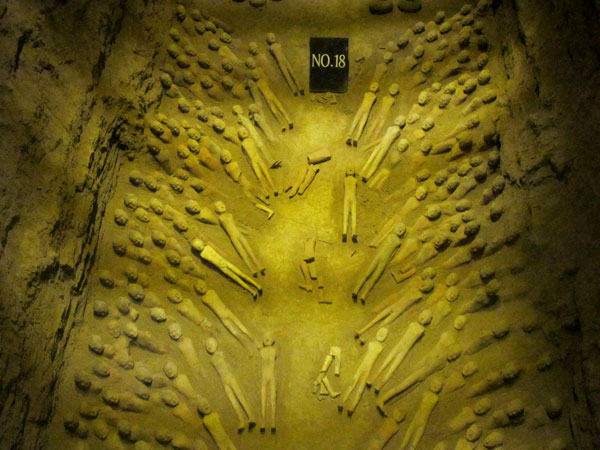
Diling in the Hangyang Mausoleum has 86 pit buried with the dead. The distribution of the buried pit and the funerary objects are no doubt related to the aulic institutions; hence, they have great value for the research of aulic institutions, emperors' life, funerary custom of Chinese Han Dynasty. Its excavation plays an important role on the origin and development of gate of tombs, and the formation and the research of the history of ancient Chinese architecture. In the these buried pit, there are densely arranged warrior figure group, storage for piling up grain, ceramic animals like cattle, sheep, pig, dog, chicken, etc. and ceramic, iron, copper life appliances; which comprehensively show the military scene of Han Dynasty.
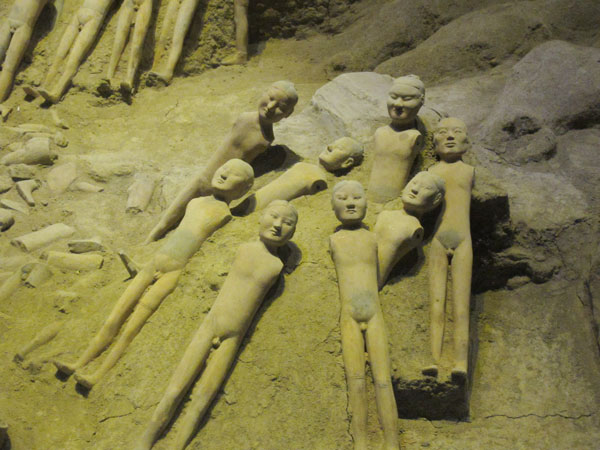
The unearthed figures in Hanyang Mausoleum are very striking. They have only a third of a real person's size, about 60 cm in height. They are naked and have no arms. According to research, these pottery figurine all dressed in all kinds of beautiful costumes while finished; and at that time, their arms are wooden. However, after one thousand years of wind and frost, their clothes and wood arm have been decayed, only leaving the bare and incomplete body. A part of the terra-cotta warriors are women, which mostly are delicate, pretty and shapely; but some have strange features. Compared with the solemn and respectful Qin Terracotta Army, the Han figures seem to be gentle and calm, which is a reflection of the peaceful social atmosphere in "Rule of Wen and Jing" of Han Dynasty.
The subordinate tomb west starts from the east of Diling, covering an area of 3.5 square kilometers. The whole tomb is divided in to several diamonds by the ditches. The tomb is distributed like a chessboard. It has orderly and well-organized overall arrangement, which apparently is designed and arranged elaborately. The discovery of this tomb has important research value.
Emperor Jing of Han (Liu Qi) was an important promoter of the famous prosperity known as the “Rule of Wen and Jing” in the Western Han Dynasty. During his reign, he implemented policies of reducing taxes and corvée labor, easing punishments, and allowing the people to recuperate. These policies contributed greatly to national stability and prosperity, laying the foundation for the powerful reign of Emperor Wu of Han.
As the resting place of Emperor Jing and his Empress Wang, Hanyang Mausoleum represents the peak of the material and cultural achievements of the “Rule of Wen and Jing.” It vividly reflects the prosperity and harmony of that era, embodying the governing philosophy and cultural spirit of the Western Han period.
Hanyang Mausoleum provides valuable physical materials for the study of the imperial burial system, funerary culture, political institutions, and economic life of the Han Dynasty. It is also a classic example of the monumental ruins reflecting the political system of a unified and centralized ancient Chinese empire.
The archaeological discoveries at the site offer important references for the study of Western Han imperial tombs. The findings help reveal the evolution of imperial architecture and burial traditions, and they play a significant role in preserving and promoting the outstanding traditional Chinese culture.
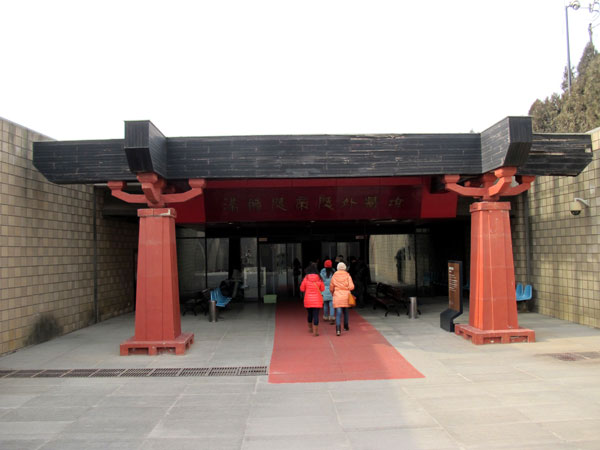
· Outer Burial Pit Site Museum: The world’s first fully underground heritage museum, displaying ten outer burial pits located northeast of the emperor’s mound. Numerous pottery figurines, animal models, and daily utensils have been unearthed, vividly recreating scenes of Han Dynasty life.
· South Gate Site Exhibition Hall: The ruins of the southern gate of the imperial mausoleum are the earliest, highest-ranking, and largest of their kind. A reconstructed Han-style gatehouse now protects the site, showcasing the architectural art of the Han period.
· Temple Site (Deyang Palace): One of the most important ceremonial buildings in the mausoleum complex, the Deyang Palace features a double-corridor structure in the shape of the Chinese character “回.” It is the best-preserved ancestral temple site among all imperial mausoleums of the Han Dynasty.
· Archaeological Exhibition Hall: This exhibition hall displays nearly a thousand exquisite cultural relics. Through texts, images, and multimedia presentations, it systematically demonstrates the archaeological achievements of Hanyang Mausoleum and the history and culture of the Han Dynasty.
· Pottery Figurines: The pottery figurines mainly include dressed and molded styles, vividly representing people from various social classes such as warriors, maids, and eunuchs. Their natural and lifelike appearance provides important information for studying Han Dynasty clothing, etiquette, and daily life.
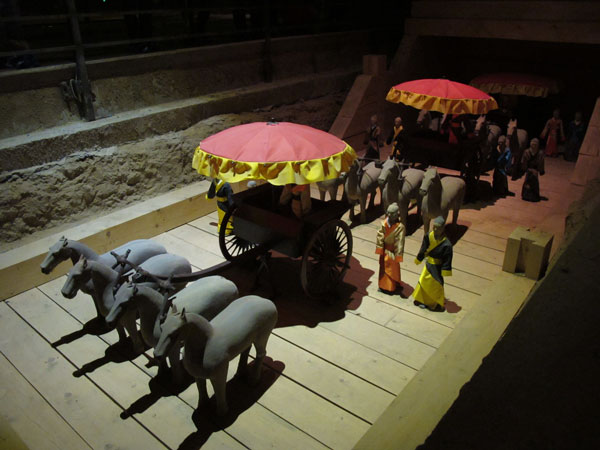
· Objects from Outer Burial Pits: These include wooden chariots and horses, grain remains, animal bones, bronze and iron utensils, and more. They embody the Han belief of “serving the dead as serving the living,” reflecting the high level of material culture during the Western Han period.
· Architectural Components: Components such as roof tiles, ridge decorations, floor bricks, hollow bricks, and stone bases unearthed from the South Gate and temple sites are of great artistic and historical value, showcasing the craftsmanship of Han architecture.
· Recommended Visiting Time: It is suggested to spend about 4–5 hours exploring the site to fully appreciate its historical and cultural charm. The scenic area is open year-round from 08:30 to 18:30, with the last entry at 17:00. Opening hours may vary seasonally, so please confirm before visiting.
· Guide Services: Professional guide services are available inside the scenic area. Hiring a guide is recommended to gain deeper insights into the meaning and cultural background of each exhibition area.
· Photography: There are beautiful natural spots within the park, such as a ginkgo forest and rose garden. The golden ginkgo leaves in autumn are particularly picturesque. Photography is allowed, but flash use is prohibited inside the museum halls to protect the artifacts.
· Ticket Information: Full ticket: 70 RMB; half ticket: 35 RMB.
· Public Transportation: Hanyang Mausoleum is located in Weicheng District, Xianyang City, quite a distance from downtown Xi’an. It is recommended to take Metro Line 2 to Honghui Hospital North Station, then take a taxi to the mausoleum, which takes about 20–30 minutes and costs around 20 RMB.
From $ 323
From $ 344

 English