Your China & Yunnan Travel Experts

 Ask a Question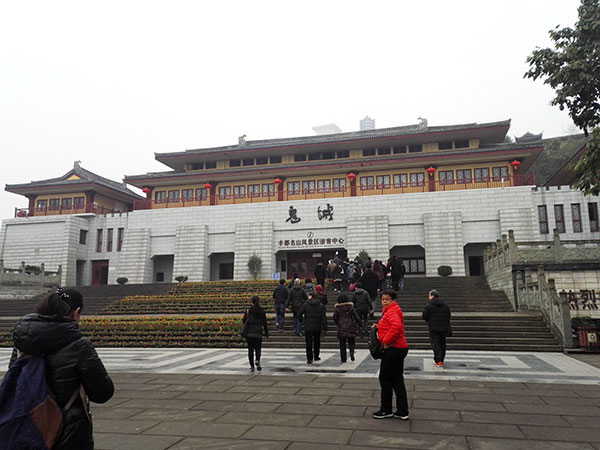
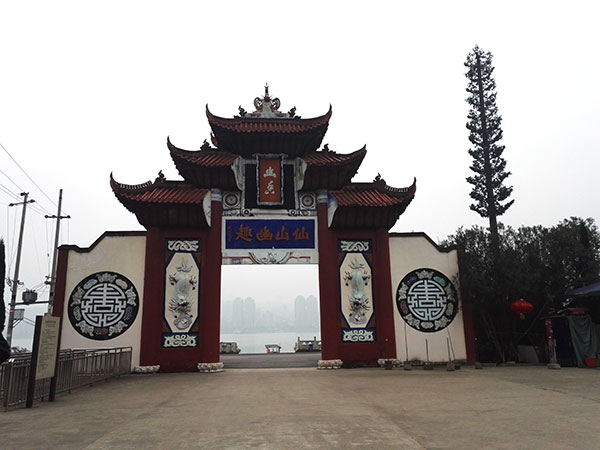
North bank of Yangtze River, Fengdu County, Chongqing, China
Perfect place to know Chinese ghost culture
Located on the northern bank of the Yangtze River, Fengdu is an ancient city with a time-honored history, known as the 'Ghost City' to most Chinese people.
Fengdu got its reputation as the 'Ghost City' in the Eastern Han Dynasty (25 A.D. - 220 A.D.). Two officials from the imperial court named Wang Fangping and Yin Changsheng, got bored with the political life in the court and came to Mt. Minshan outside the Fengdu City to practice Taoist teachings. Both of them later became immortals by carrying out self-cultivation. This story widely spread and makes Mt. Minshan famous. When combined together, their surnames Yin and Wang, sound very much like 'King of Hell' in Chinese, hence the people began to call Fengdu the 'Ghost City'.
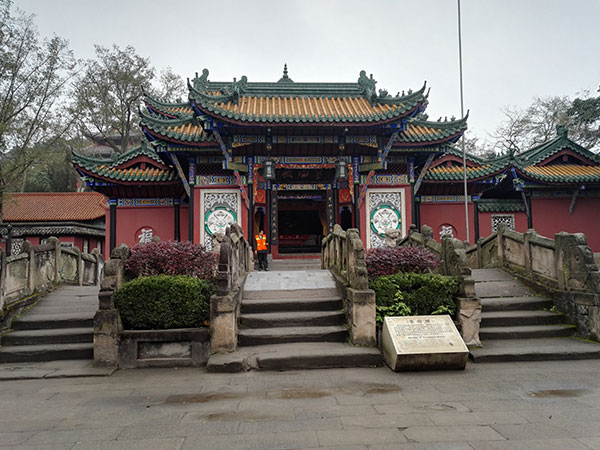
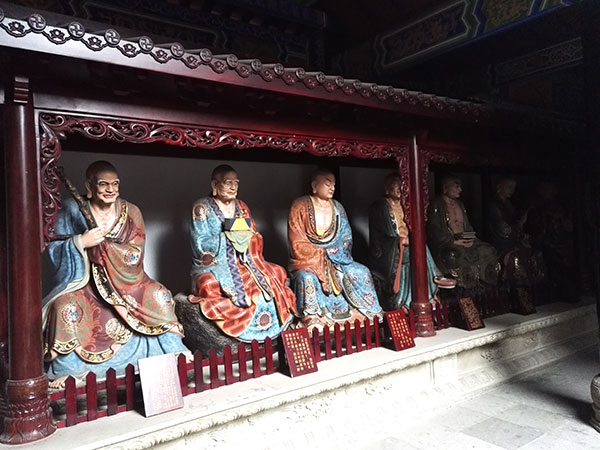
According to superstitious legend, the dead come to Fengdu Ghost City and the devils go to hell. Since Tang Dynasty, forty-eight temples have been built in the place, such as the 'Hall of the Jade Emperor', 'the Palace of Hell', 'Boundary Between the Living and the Dead', 'the Ridge of Helplessness' and 'the Balcony of Nostalgia'. All of the temples there look quite magnificent while statues are extremely lifelike.
The national first batch AAAA level tourist area – Fengdu Ghost City, originated in Han dynasty is a famous historical and cultural city, has been touted as "the devil city”, "the land of the dead", the home to return to the land of human beings. It is not only a legendary ghost town, but also a art treasure house in collection of Confucianism, Taoism and Buddhism as one of the folk culture and it is one of the most famous cultural landscape on the Yangtze River Cruise.
Fengdu Ghost City is located in the southeast of Sichuan basin, located in the Yangtze River upstream, is the home of Qili. It is an ancient city close to mountain and river, in the Spring and
Autumn Period, people called it “Bazi City”. It is the first attraction along the Yangtze River three gorges tourism scenic spots going from Chongqing. Legend has it that there is a home of soul after death. Since the ancient times Fengdu Ghost City is the famous cultural city, is China's most distinctive, the most famous historical and cultural town, and it is famous with its ghost town culture famous throughout the ages. With its long history, unique cultural connotation, the legend of magic, the beauty of the scenery and irreplaceable ornamental value, it shows mysterious oriental culture to tourists from home and abroad.
Visiting Fengdu Ghost City (Mingshan Scenic Area) is relatively easy and well-organized. After entering the scenic gate, follow the signs along the mountain path that leads upward through the main attractions. Along the way, you’ll pass famous landmarks such as the Hengha Temple, Naihe Bridge, Gate of Hell, Road to the Yellow Springs, Hall of Yama, and the Eighteen Levels of Hell.
Inside the Ghost City, you’ll see lifelike statues of legendary underworld figures including Ox-Head and Horse-Face, the Judges of the Dead, and King Yama himself. The scenes in the “Eighteen Levels of Hell” vividly illustrate the traditional Chinese belief in karma and moral retribution — encouraging people to do good and avoid evil.
These mythical depictions of the underworld reflect the ancient Chinese perception of life, death, spirits, and the afterlife. It is recommended to visit with a local guide, who can share the background stories and explain ancient taboos and customs. The full tour takes about 3–4 hours. Visitors can take a cable car to ascend the mountain, saving energy while enjoying scenic views of the Yangtze River and Mingshan Mountain.
1. Hengha Temple (哼哈祠)
This is the first stop in the Ghost City, dedicated to the two guardian generals Heng and Ha (Zheng Lun and Chen Qi), who are believed to guard the gates of the underworld. It is said that their “Heng” and “Ha” breaths can subdue evil spirits. Visitors are encouraged to shout “Heng!” and “Ha!” loudly to drive away small ghosts — an amusing and interactive ritual.
2. Naihe Bridge (奈何桥)
Built during the Yongle period of the Ming Dynasty, this structure consists of three parallel stone arch bridges — the Gold Bridge, Silver Bridge, and Naihe Bridge in the center. According to legend, every soul must cross this bridge after death. The good can pass safely, while the wicked are struck by ghost guards and fall into the “Bloody River.” When crossing, it’s customary to take odd-numbered steps (five or seven). Couples may walk nine steps hand in hand, symbolizing reunion in the next life.
3. Gate of Hell (鬼门关)
This ominous gate marks the entrance to the underworld. The threshold is tall and intimidating — men should step over from the left, women from the right, and no one should touch the threshold, as it is believed to bring misfortune. It’s said that this gate tests the virtue of the soul — only the righteous may pass freely.
4. Road to the Yellow Springs (黄泉路)
A narrow stone path said to guide souls to the netherworld. Along the way, warning tablets remind travelers not to look back, lest they be seized by ghosts as substitutes. Visitors can experience the chilling ambiance and understand the Chinese saying, “On the road to the Yellow Springs, there is neither young nor old.”
5. Terrace of Nostalgia (望乡台)
Located at the end of the Road to the Yellow Springs, this is believed to be where souls take their final glance toward home. The terrace, painted in blue tones, evokes a sense of sorrow and longing. From here, visitors can overlook the Yangtze River and Fengdu New Town, connecting the myth of farewell with the beauty of the landscape.
6. Hall of the Heavenly Emperor (天子殿)
Originally built in the Western Jin Dynasty, this is the core hall of the Ghost City, enshrining King Yama, ruler of the underworld. The hall’s couplet reads:
“Even the most cunning hero must tremble upon arrival;
Those who deceived Heaven can deceive no more here.”
Visitors can test their virtue by standing on the Trial Stone — if one can balance for three seconds on one foot, it symbolizes passing the judgment of divine justice.
7. The Eighteen Levels of Hell (十八层地狱)
This immersive area uses sound, light, and visual effects to recreate scenes of ancient hellish punishments such as the Mountain of Knives, the Boiling Oil Pot, and more. It serves as a dramatic moral warning that good deeds bring reward and evil deeds bring punishment. The setting is somewhat eerie — perfect for brave visitors seeking a thrill.
8. Hall of the Jade Emperor (玉皇殿)
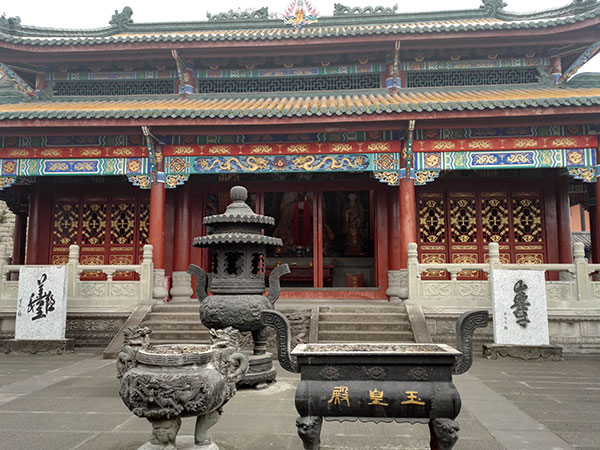
The largest statue on Mingshan is housed here, dedicated to the Jade Emperor, the supreme Taoist deity. The hall is richly decorated, featuring other deities such as the Jade Emperor’s consort and Sun Bin. Outside the hall stands a stone tablet inscribed with “唯善呈和” (“Only Goodness Brings Harmony”), expressing the core moral philosophy of the Ghost City — promoting virtue and discouraging evil.
9. Thirty-Three Heavenly Steps (三十三重天 / 登天梯)
This stairway of 33 massive stone steps represents the “Thirty-Three Heavens.” Each step weighs nearly a thousand jin (about 500 kg). Climbing symbolizes “ascending to heaven in one step.” Legend says that those who can reach the top in one breath will be blessed with success and good fortune.
10. Hall of a Hundred Children (百子殿)
In ancient times, pilgrims came here to pray for children and family blessings. The brick and wood carvings in front of the hall vividly depict wishes for fertility and child safety, revealing the tender and humane side of Fengdu’s ghostly culture.
You can take a high-speed train from Chongqing to Fengdu Railway Station, then a short taxi ride to the scenic area. However, the best and most popular way to visit Fengdu Ghost City is as part of a Yangtze River Cruise — it’s one of the key stops along the Three Gorges Cruise route, allowing travelers to explore the site conveniently while enjoying the river’s breathtaking scenery.
From on request
From $ 327

 English