Your China & Yunnan Travel Experts

 Ask a Question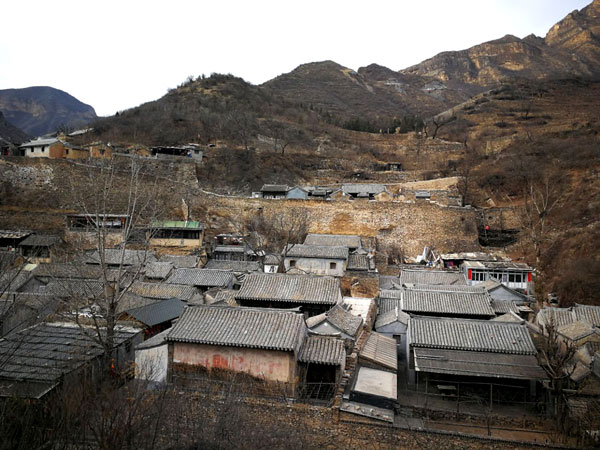


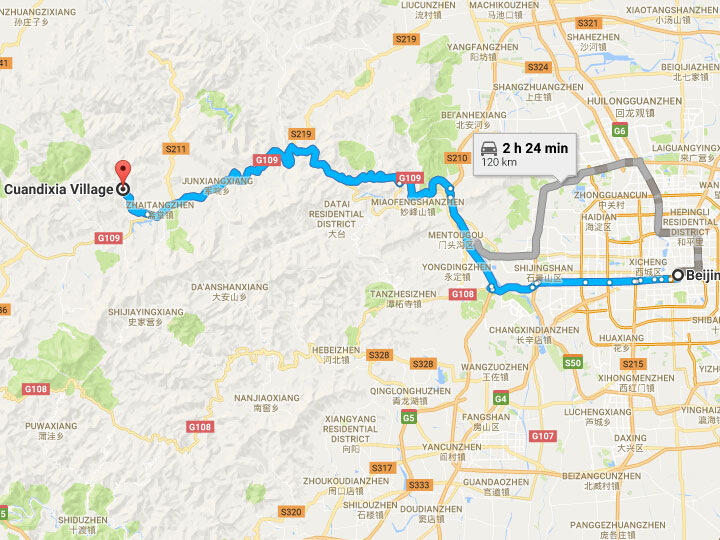
about 100 km W. of Beijing, China
A hillside old village with well-preserved Ming dynasty houses
Cuandixia was first established during the Yongle reign of the Ming Dynasty (early 15th century). The name “Cuandixia” literally means “below the Cuān Pass,” as the village sits beneath the ancient military pass called Cuanlian Pass.
According to historical records, in 1515 (the 10th year of Emperor Zhengde), three brothers from the Han family were sent here to guard the pass. Over time, their descendants multiplied, gradually forming a self-sufficient community. During the Ming and Qing dynasties, Cuandixia flourished as a post station and inn village along the ancient trade route between Beijing and Shanxi Province.
In later centuries, the villagers transitioned from military garrison life to farming and small-scale commerce, cultivating grain and trading goods. During the War of Resistance Against Japan (1937–1945), Cuandixia served as the seat of the Anti-Japanese Democratic Government of Wanping District, earning it the title of “Model Village of Resistance.”
Today, the entire settlement stands as a living museum of northern Chinese history, where layers of military, cultural, and revolutionary past coexist.
The village spreads across the hillside in a fan-shaped pattern, centered around Longtou Mountain. Its layout follows traditional Feng Shui principles, blending naturally with the surrounding landscape.
Cuandixia is home to over 70 courtyard houses dating from the Qing Dynasty, built primarily of grey stone and wood. These siheyuan-style dwellings feature north-facing main halls, side rooms, carved gate towers, and decorative screens. Many courtyards are divided into two tiers—upper terraces for residential use and lower terraces once used for shops or stables, connected by narrow stone alleys and stairways.
The architecture reflects a unique combination of northern grandeur and southern delicacy. Exquisite carvings on door frames, windows, and shadow walls display intricate motifs of flowers, animals, and auspicious symbols. These details speak of the villagers’ craftsmanship and cultural refinement.
From above, the entire village resembles a gourd or ancient ingot, believed to bring prosperity and harmony — a remarkable example of ancient Chinese settlement planning.
Cuandixia’s preservation has made it one of the most valuable examples of traditional northern Chinese rural architecture. In 2003, it was officially recognized as one of the First Batch of China’s Historic and Cultural Villages, and in 2012, it was included in the First List of Traditional Chinese Villages.
The village is not only an architectural gem but also a site of patriotic and cultural education. Several anti-Japanese relics, such as the Nampoliang Battle Site and Guandi Temple, remain as witnesses to its heroic past.
Local folk customs are still vibrant here. Traditional festivals include the Lantern Festival stilt performances, Guandi worship ceremonies, and Dragon King rain prayers. These rituals showcase the unique blend of religious faith, community unity, and agrarian culture in the mountainous regions of northern China.
Beyond its historical beauty, Cuandixia is surrounded by striking natural landscapes. The village is embraced by mountains on all sides, creating a serene and photogenic valley scene.
A short walk from the village leads to the “Yixiantian” Gorge, meaning “A Streak of Sky.” This dramatic natural passage is a deep, narrow canyon where sheer cliffs rise almost vertically on both sides, allowing only a slim line of sunlight to reach the bottom. Formed by geological faulting, it once served as a natural defense barrier and is now a popular hiking and photo spot.
In spring, wildflowers bloom along the slopes; in autumn, fiery red leaves cover the hills, creating a breathtaking tapestry of color. Each season paints a new landscape — tranquil and poetic, just like a living Chinese ink painting.
1. Stroll Through the Ancient Lanes
Wander the cobblestone alleys, admire the centuries-old courtyards, and observe the village’s layered terraces. Don’t miss landmarks like the Wealthy Family’s Courtyard, Wudao Temple, and Dragon King Temple, each reflecting the rich folk beliefs and craftsmanship of the Ming and Qing eras.
2. Visit the Observation Platform
Climb the slope of Jinchanshan (Golden Toad Hill) opposite the village for a panoramic view. From here, Cuandixia appears like a cluster of ancient coins or a gourd-shaped treasure, an unforgettable sight for photographers.
3. Experience Local Cuisine
Stop by one of the traditional farmhouse restaurants for a hearty countryside meal. Local favorites include roast lamb leg, braised chicken with potatoes, and stewed tofu, all made from fresh mountain ingredients.
4. Discover the “A Streak of Sky” Gorge
If time permits, hike to Yixiantian Gorge, featured in several Chinese films such as The Warlords. The towering cliffs and cool shade offer a refreshing contrast to the village’s stone courtyards.
5. Stay Overnight
For those seeking a deeper experience, consider spending a night in one of the family-run guesthouses. Sleeping in a century-old courtyard under a starry sky is the best way to feel the soul of the ancient village.
Getting There:
By Public Transport: Take Subway Line 1 to Pingguoyuan Station, then transfer to Bus No. 892 to Zhaitang Town, and take a local taxi to Cuandixia Village.
Recommended Visiting Time: Spring and autumn are the most scenic, with mild weather and colorful foliage.
Walking Tips: Wear comfortable shoes, as the stone steps can be steep and uneven. Bring warm clothing — the mountain air is cooler than in downtown Beijing.
Dining: Affordable and authentic local food is available throughout the village.
Safety: Respect the ancient architecture — avoid climbing or touching fragile structures. Exercise caution if hiking around the gorge or mountain paths.
Morning (08:00–12:00): Depart from Beijing around 8:00 am. Upon arrival, explore the main village, visit ancient courtyards such as the Wealthy Merchant’s House, Guandi Temple, and Wudao Temple. Climb to the viewing platform on Golden Toad Hill for panoramic photos.
Noon (12:00–13:00): Enjoy lunch at a local farmhouse restaurant, savoring traditional northern Chinese dishes and relaxing in the courtyard.
Afternoon (13:00–15:30): Continue exploring hidden alleys, admire stone carvings and door decorations, then visit Yixiantian Gorge for hiking and photography.
16:00: Return to Beijing, ending a peaceful and enriching day in the mountains.
From on request
From $ 306
From on request

 English