Your China & Yunnan Travel Experts

 Ask a Question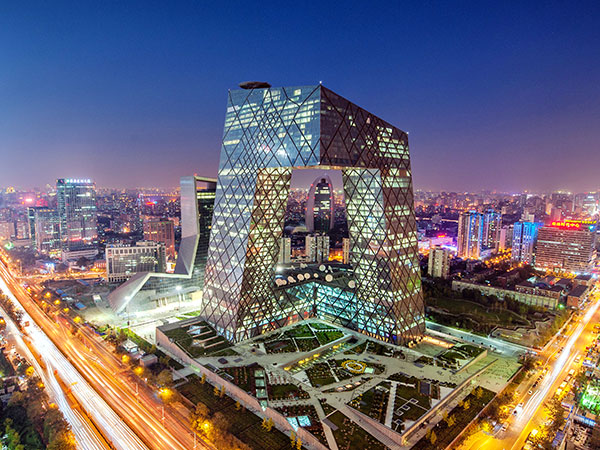
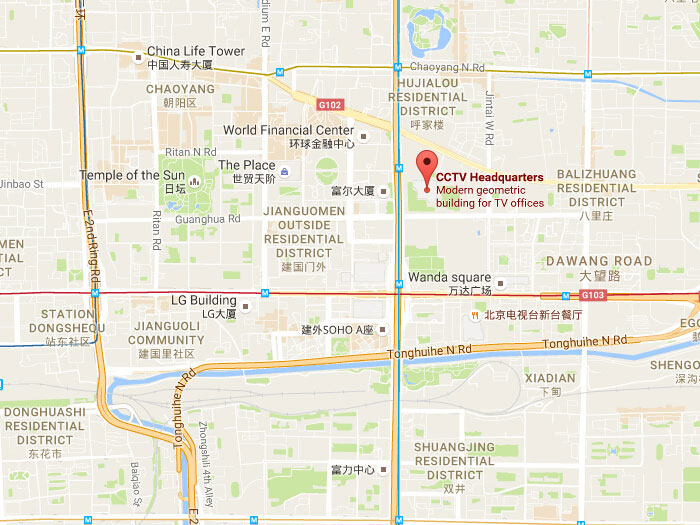
32 E. 3rd Ring Rd. Middle, Chaoyang District, Beijing, China
One of new landmark of Beijing, An avantgarde architecture in Beijing
The attractive CCTV Headquarter which was completed on Jan 1, 2008 is a 234 m (768 ft), 44-storey skyscraper in the Beijing Central Business District and serves as headquarters for the China Central Television. Rem Koolhaas and Ole Scheeren of OMA were the architects in charge for the building, while Arup provided the complex engineering design.
More than just a single building, the headquarters project embodies a broader vision to redefine the center of Beijing. The initiative sought to create an urban landscape blending creative, striking architecture with functional public spaces, while ensuring harmony with the city’s historical roots. The CCTV Tower quickly became an anchor of this transformation, signaling the beginning of a modern business district filled with innovative skyscrapers.
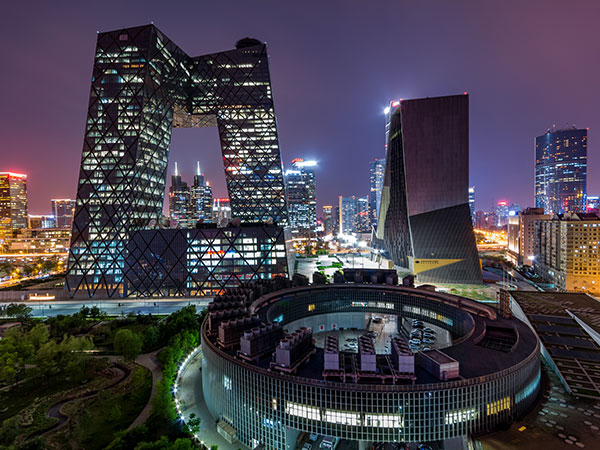
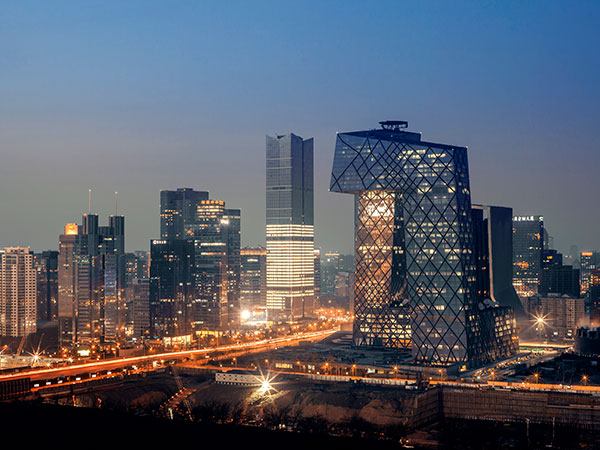
Stylistically, the structure is bold, unconventional, and immediately eye-catching. Its most distinctive feature is the form itself: two leaning towers connected at the top and bottom, forming a dramatic continuous loop. This has often been described as a “Z-shaped criss-cross”, while locals fondly refer to it as the “Big Pants” due to its unique silhouette. The building is composed of three major parts:
1. Main Building
The main headquarters consists of five functional sections:
This layout accommodates the vast operational needs of a national broadcasting center, creating an efficient flow for content production, editing, and distribution.
2. The TV Cultural Center
Designed to serve both media professionals and the public, it includes:
3. Auxiliary Facilities
These cover approximately 110,000 square meters and include:
Beyond its dramatic shape, the building is celebrated for its structural innovation. The two towers tilt inward at a remarkable 6-degree angle, an engineering feat rarely attempted at such scale. At a height of 162 meters, they merge through a massive cantilever—extending 75 meters outward and weighing approximately 18,000 tons.
The building employs a unique diamond-patterned steel façade known as a “diagrid.” This high-precision structural network allows engineers to distribute weight and counteract the stresses created by the irregular shape and cantilevered sections. Glass panels baked with gray ceramic frits provide both sun shading and a distinctive reflective quality, enabling the building to adapt to Beijing’s climate while enhancing its visual texture.
The tower embodies several conceptual ideas:
1. Symbol of Media and Communication
Its loop form evokes notions of information flow, symbolizing CCTV’s mission to “connect China and the world.” Its shape has been interpreted as a window of media, a gateway of communication, and an emblem of transparency in the digital age.
2. Urban Interaction
Koolhaas envisioned the building as a model for the “contemporary city”—fluid, interconnected, and multi-layered. Its dramatic geometry contrasts with traditional Chinese architectural forms while harmonizing with the modern CBD skyline.
3. Sustainability
The design integrates: Energy-efficient glazing; Intelligent ventilation systems; Adaptive lighting and temperature controls
These features reflect China’s commitment to sustainable urban development in its new-generation landmark buildings.
The CCTV HQ is internationally recognized for its engineering breakthroughs:
Advanced steel craftsmanship, including high-grade steel and precision welding
Complex load-distribution systems supporting the suspended sections
Specialized fire and evacuation solutions tailored for its non-linear internal layout
Sophisticated intelligent building operations, enhancing energy efficiency and user comfort
Since completion, the CCTV Tower has grown into a symbol of Beijing’s global identity. It appears frequently in films, photography, and international media, often described as one of the world’s most daring skyscrapers. Over the years, it has won numerous accolades such as:
“World’s Top Ten Architectural Miracles”
“Best Tall Building Worldwide Award”
The tower helped elevate China’s architectural reputation, pushing the boundaries of design and construction in the 21st century.
2009 Fire and Reconstruction
On the 2009 Lantern Festival, fireworks ignited a fire in the Television Cultural Center beside the main tower. While the affected building required major repairs, the main headquarters tower was structurally unharmed. Reconstruction began soon after, and by 2010 the complex resumed full restoration plans.
Although the interior is not open to the public, the exterior and surrounding areas offer excellent photo opportunities and architectural viewing experiences.
Getting There
Recommended Walking Route
Start at the main entrance and follow the sidewalk around the building's perimeter. Walking a full loop gives you changing perspectives of the leaning towers and suspended sections, helping you appreciate the complexity and expressive power of the architecture.
Top Photography Spots
1. Jinghua South Street: Ideal for capturing the building from below. Visit at night when the tower illuminates dramatically.
2. Guanghua Bridge: Offers dynamic angles with streaking car lights, perfect for futuristic urban shots.
3. China World Mall Terrace: From the 6th-floor terrace, you can shoot wide-angle skyline photos including the CCTV Tower.
4. Kerry Centre Garden: A softer, lifestyle-style setting with greenery and lounge chairs—a favorite among photographers.
Photography Tips
Visitor Notes
From on request
From $ 306
From on request

 English