Your China & Yunnan Travel Experts

 Ask a Question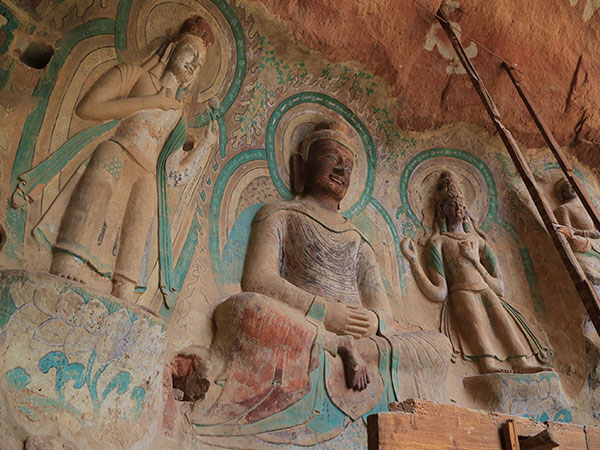
Yongjing Prefecture, Gansu Province.
Grottoes.
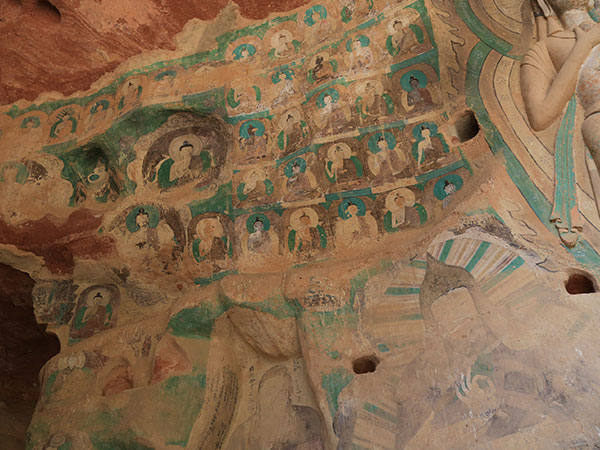
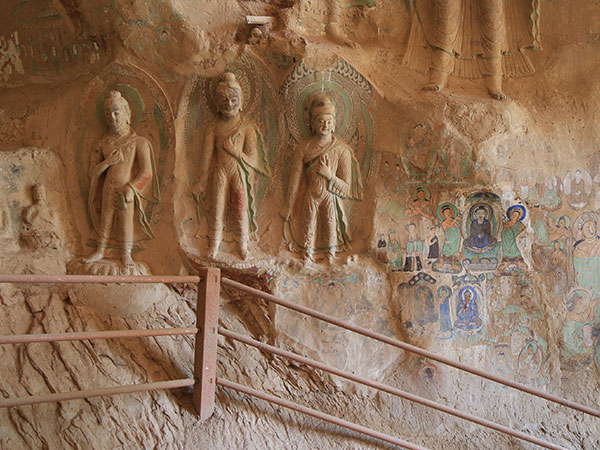
The stone sculptures in Bingling Thousand-Buddha Caves represent the social situations and customs during ancient times. In the vicinity of the caves are green hills, crystal-clear water, grotesque stones and precipitous cliffs, which add more beauty to this artistic site. After the founding of People's Republic of China, the State Council designated the site as a key cultural relic, and placed it under state protection.
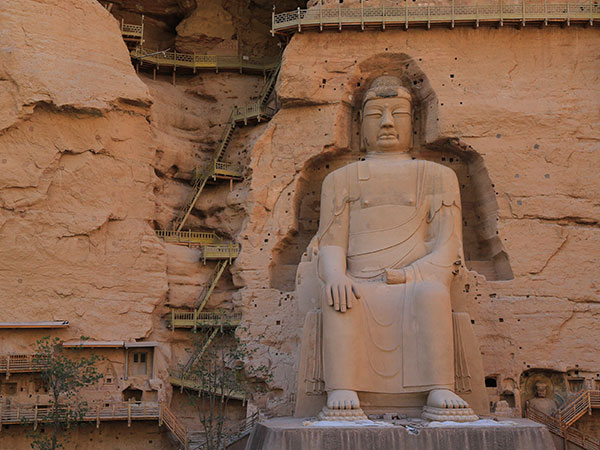
Statue of Maitreya is a 27-meter-high seated statue of Maitreya, which can best reflect the economic strength of the Tang Dynasty among many statues in Bingling Temple. The Giant Buddha was carved in Tang Dynasty(731). The statue is composed of stone carving and clay sculpture, which is unique in China.
At the time of construction, there was a large and magnificent wooden ladder building in front of the Buddha. The nine-story pavilion was built to the top of the Statue of Maitreya, and the Buddha was indoors. In Qing Dynasty(1874), the buildings around the Statue of Maitreya were destroyed by war. And the clay sculpture of the giant Buddha has been destroyed. Although we can't see the whole appearance of the Statue of Maitreya, it still retains the characteristics of the Tang Dynasty.
The Cave 169 is the earliest and most valuable cave in Bingling Temple. It is 9 meters deep, 16 meters high and 27 meters wide. It is one of the earliest Buddhist grottoes in China. At the Cave 169, you can know about the characteristics of Buddhist art at the early stage. The inscription at the Cave 169 was carved in 420, which is over 100 years earlier than that of the Mogao Grottoes.
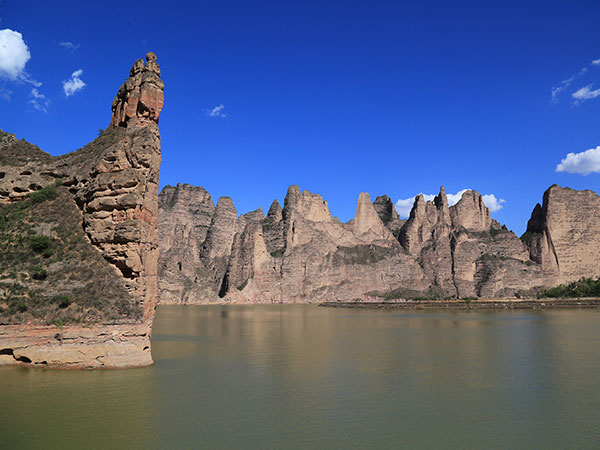
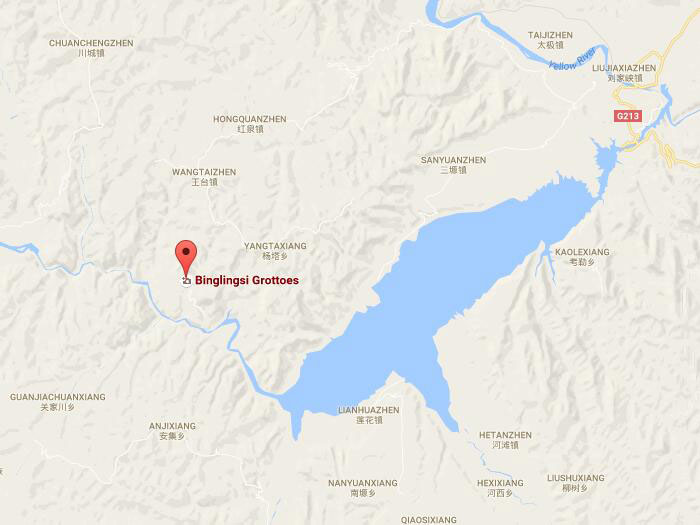
Bingling Temple Scenic Area is located in Yongjing County, Linxia Hui Autonomous Prefecture, Gansu Province, with a total area of 180 square kilometers. It consists of Bingling Lake, Bingling Danxia National GeoPark(Bingling Stone Forest) and Bingling Temple Grottoes.
Bingling Lake
Bingling Lake is the reservoir of Liujiaxia Hydropower Station, with a water area of 130 square kilometers and a storage capacity of 5.7 billion cubic meters. It is named after Bingling Temple at the end of the reservoir. The Biling Lake is like endless green silk rippling in the mountains, and the scenery combines the beauty of the south of the Yangtze River with the grandeur of the plateau, making it a fascinating tourist destination. At the Bingling Lake, you can witness the astonishing and spectacular view of the intersection of the Yellow River and Taohe River. Liujiaxia Hydropower Station is famous hydro project in Asia independently designed and constructed by China.
Bingling Danxia Geopark
Bingling Danxia Geopark, also known as Bingling Stone Forest, is a Danxia landform formed by the accumulation of Cretaceous purplish red fine sandstone in the early Cenozoic. Bingling Danxia Geopark is located in Yangta Township, southwest of Yongjing County, 35 kilometers away from Yongjing County. With a total area of 23.36 square kilometers and an average elevation of 1,783 meters, Bingling Danxia Geopark boasts canyons, stone pillars, peak forests and red cliffs. Based on the red continental sedimentary strata in the early Cretaceous(120-144 million years ago) in the late Mesozoic, a large number of precious geological relics of orogenic belt structures are preserved.

 English