Your China & Yunnan Travel Experts


 Ask a Question
Teochew (Chaoshan) culture stands as one of the most distinctive and well-preserved regional cultures in southern China. Rooted in the traditions of the Teochew ethnic subgroup, this time-honored civilization has evolved over more than two millennia, blending maritime openness, Confucian etiquette, and exquisite folk craftsmanship. Unlike many localized cultures that have gradually faded with urbanization, Teochew culture retains a complete and vibrant cultural system, covering language, performing arts, folk customs, traditional handicrafts, and ancient architecture. It is not only a precious treasure of Lingnan culture but also a vital cultural bond connecting overseas Teochew communities worldwide. With unique aesthetic values, rigorous cultural ethics, and inclusive spiritual connotations, Teochew culture has long been renowned as a classic representative of China’s coastal regional civilization.
Teochew culture refers to the overall cultural system created, inherited, and developed by the Teochew people, a unique Han ethnic subgroup in eastern Guangdong. As an important branch of Minnan cultural system with independent regional characteristics, it is defined by core traits of respecting Confucianism, emphasizing etiquette, valuing integrity, and pursuing exquisite craftsmanship. Born from the special geographical environment of mountains surrounding the sea, Teochew culture integrates the steadfastness of inland agricultural civilization and the boldness of maritime civilization. It inherits the essence of traditional Chinese rituals and humanities while forming distinctive folk customs and artistic styles adapted to coastal life.
The core spirit of Teochew culture can be summarized as diligence, pragmatism, solidarity, and inheritance. Locals adhere to the concept of “prioritizing etiquette and morality, valuing family and hometown”, forming a strong clan consciousness and cultural inheritance awareness. For centuries, even as countless Teochew people migrated overseas for survival and development, they have always adhered to traditional cultural norms, spreading Teochew customs, arts, and spirits across the globe. In essence, Teochew culture is a living cultural heritage that integrates tradition and openness, agriculture and maritime trade, folk customs and elegant art, fully reflecting the unique wisdom and spiritual pursuit of the Teochew people.
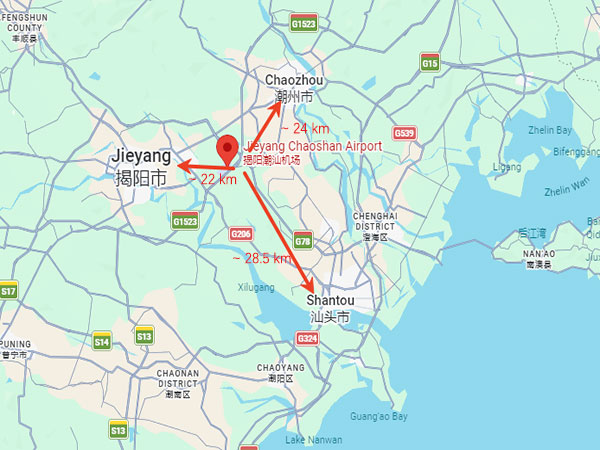
The core inheritance area of Teochew culture is the Chaoshan Plain in eastern Guangdong, covering three prefecture-level cities: Chaozhou, Shantou, and Jieyang, which constitute the core territory of traditional Teochew culture. Specifically, it includes the urban areas and subordinate districts and counties of Chaozhou (Xiangqiao District, Chao’an District, Raoping County), Shantou (Jinping District, Longhu District, Haojiang District, Chaoyang District, Chaonan District, Chenghai District, Nan’ao County), and Jieyang (Rongcheng District, Jiedong District, Jiexi County, Huilai County, Puning City). This contiguous plain area with similar geography, climate, and living environments forms the unified cultural circle of native Teochew culture.
Beyond the core region, Teochew culture has extensive radiation and inheritance areas. In China, many towns and villages in the adjacent areas of Meizhou and Shanwei also retain typical Teochew cultural characteristics. Globally, Teochew culture has become a transnational cultural symbol. As one of the most influential overseas Chinese cultural factions, more than 20 million Teochew descendants are distributed in over 40 countries and regions, mainly concentrated in Southeast Asian countries such as Thailand, Malaysia, Singapore, and Indonesia, as well as Europe, America, and Australia. These overseas Teochew communities have built Teochew guild halls, cultural associations, and schools, enabling Teochew culture to take root and spread overseas, forming a unique cultural pattern of “one native land, global inheritance”.
The development of Teochew culture spans more than 2,000 years, with a clear and complete historical context that can be divided into four key stages: germination, formation, prosperity, and global spread. In the Qin and Han dynasties, the Chaoshan area was initially incorporated into the central dynasty’s territory. Central Plains immigrants continuously moved southward, bringing advanced agricultural technology and traditional Confucian culture, laying the initial cultural foundation for the region. At this stage, Teochew culture was in its germination period, integrating the primitive customs of local indigenous people with Central Plains culture.
The Sui and Tang dynasties marked the initial formation of Teochew culture. With the opening of maritime trade routes, the Chaoshan area gradually became an important coastal trade port. Frequent economic and cultural exchanges with the outside world made the regional culture more open and diverse. Meanwhile, the spread of Confucianism, Buddhism, and Taoism further standardized local folk customs and etiquette, forming the basic cultural temperament of respecting rituals and valuing education.
The Song and Ming dynasties were the golden age of Teochew cultural prosperity. A large number of Central Plains literati and craftsmen moved to Chaoshan to avoid wars, bringing sophisticated traditional arts and cultural concepts. During this period, Teochew dialect was finalized, Teochew opera took initial shape, and traditional handicrafts such as wood carving and embroidery gradually matured. The region was hailed as “Coastal Zou and Lu”, a title testifying to its prosperous cultural and educational atmosphere. In the Ming and Qing dynasties, with the booming maritime trade, the Teochew maritime culture fully matured, and folk customs such as Kongfu tea and Yingge Dance were widely popularized, forming a complete and distinctive cultural system.
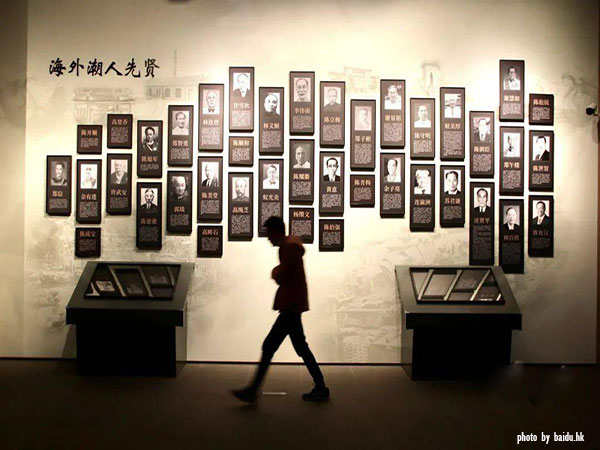
Since modern times, with the large-scale overseas migration of Teochew people, Teochew culture has embarked on the road of global spread. It has merged with local cultures in various countries while maintaining its own traditions, realizing innovative inheritance in communication and integration. Today, many Teochew cultural items have been included in national and global intangible cultural heritage lists, becoming an important window for showcasing traditional Chinese regional culture.
4.1 Teochew Dialect
Teochew dialect (Tiê-suaⁿ huē) is the carrier and core symbol of Teochew culture, belonging to the Southern Min language family and known as one of the most ancient and well-preserved dialects in China. It retains a large number of ancient Chinese pronunciations, vocabulary, and grammatical structures from the Tang and Song dynasties, which are no longer used in modern Mandarin, earning it the reputation of “a living fossil of ancient Chinese”.
With unique phonetic systems, rich tones, and vivid expressions, Teochew dialect is not only a daily communication tool for local people but also the foundation of Teochew opera, folk ballads, and other artistic forms. All traditional Teochew arts and folk customs are rooted in Teochew dialect, without which the inheritance of Teochew culture would be impossible. In recent years, facing the impact of Mandarin and modern internet language, local institutions and folk groups have actively carried out dialect inheritance work, launching Teochew dialect courses, original dialect songs, and short videos, enabling this ancient dialect to glow with new vitality in modern society.
4.2 Teochew Opera
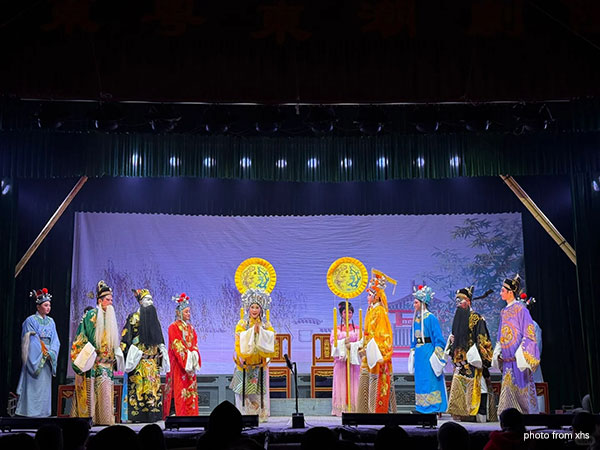
Teochew Opera is one of the oldest local opera genres in China, with a history of more than 400 years, evolved from Southern Opera of the Yuan and Ming dynasties. It was listed as a national intangible cultural heritage and is popular among 20 million Teochew people around the world. Different from other Chinese operas, Teochew Opera is performed entirely in Teochew dialect, with unique singing tunes, elegant melodies, and vivid and down-to-earth performance styles.
The repertoire of Teochew Opera is mostly derived from historical stories, folk legends, and ethical tales, focusing on promoting loyalty, filial piety, benevolence, and righteousness, carrying forward traditional Chinese moral values. Its performance integrates singing, recitation, acting, and acrobatics, accompanied by traditional musical instruments such as yehu, yangqin, gongs, and drums, forming a strong local flavor. Classic repertoires such as The Legend of Lychee Mirror have been passed down for hundreds of years and remain popular today. From temple fairs in rural Chaoshan to overseas Teochew cultural festivals, Teochew Opera has always been the most important artistic carrier for condensing Teochew ethnic emotions.
4.3 Teochew Kongfu Tea
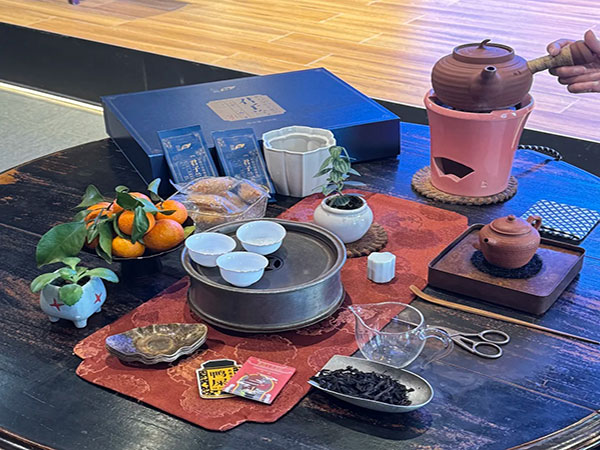
Teochew Kongfu Tea is a representative folk custom of Teochew culture and an indispensable part of Teochew people’s daily life. It is not merely a way of drinking tea but a life philosophy and etiquette culture. The so-called “Kongfu” refers to the rigorous and exquisite tea-making procedures, which focus on elaborate techniques, standardized procedures, and tranquil state of mind.
Teochew Kongfu Tea uses local phoenix dancong tea as the main raw material, with a complete set of exquisite tea sets and fixed tea-making steps including warming the cup, washing the tea, brewing, and serving. The whole process emphasizes tranquility, concentration, and etiquette. In Teochew society, drinking Kongfu tea is the main way for family gatherings, friend entertainment, and business communication. It embodies the Teochew people’s pragmatic, refined, and humble life attitude. For hundreds of years, Kongfu Tea has penetrated every corner of Teochew people’s life, becoming the most intuitive cultural symbol of Teochew culture and spreading to all parts of the world with overseas Teochew people.
4.4 Yingge Dance
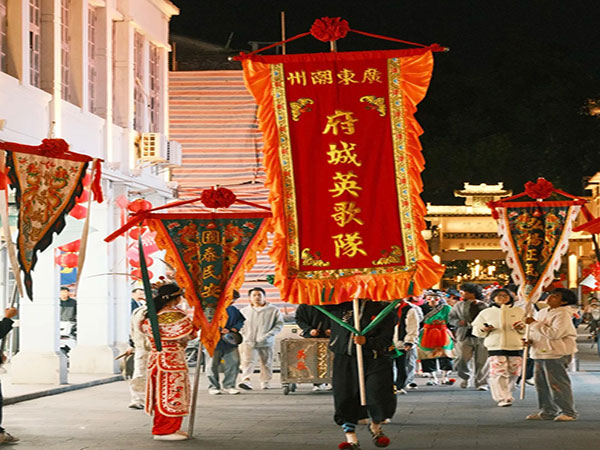
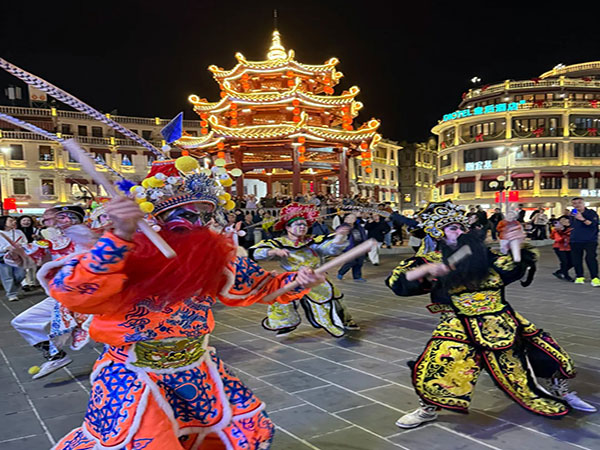
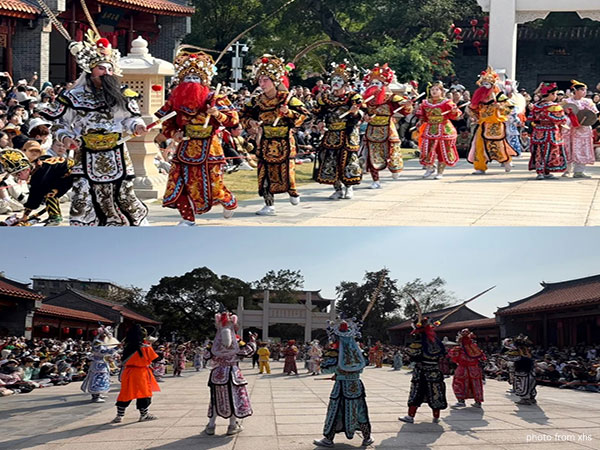
Yingge Dance is a bold and powerful traditional folk dance unique to the Teochew region and a national intangible cultural heritage. Originating from folk opera and martial arts, it combines dance, martial arts, and folk parade, with a vigorous and unrestrained performance style, known as the “living folk carnival” of Teochew area.
Yingge Dance performances are usually held during traditional festivals such as Spring Festival and Lantern Festival. Dancers wear unified costumes, hold wooden sticks, and perform neat and powerful movements with strong rhythm. The whole team is magnificent and full of vitality, symbolizing the Teochew people’s bold, enterprising, and united spirit. Rooted in folk life, Yingge Dance carries local people’s prayers for good weather, bumper harvests, and peaceful life. In recent years, Yingge Dance has broken regional restrictions, appearing on major national cultural stages, and has become a famous cultural business card of Teochew culture, showing the vigorous vitality of Chinese folk art.
4.5 Teochew Wood Carving
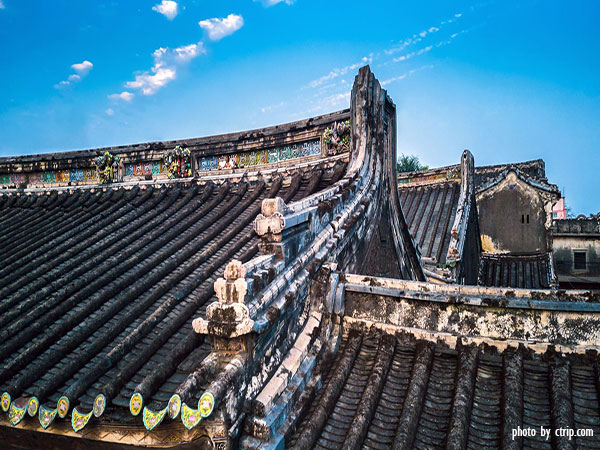
Teochew Wood Carving is an exquisite traditional craft with a long history, famous for its complex craftsmanship, exquisite carving, and gorgeous layers, and is a national intangible cultural heritage. Originating in the Tang and Song dynasties and flourishing in the Ming and Qing dynasties, it is mainly used in the decoration of ancient buildings, ancestral halls, and furniture.
Teochew Wood Carving adopts diverse techniques such as relief carving, hollow carving, and multi-layer overlapping carving, with extremely fine carving details. The themes are mostly traditional auspicious patterns, historical stories, flowers and birds, and folk customs, implying auspicious meanings of good fortune, prosperity, and family harmony. Different from the simple and grand style of northern wood carving, Teochew Wood Carving pursues exquisite, dense, and gorgeous visual effects, reflecting the Teochew people’s rigorous and exquisite aesthetic pursuit. A large number of well-preserved ancient wood carving works in Chaoshan ancient buildings are precious art treasures inherited from generation to generation.
4.6 Teochew Embroidery
As one of the four major embroidery schools in Guangdong, Teochew Embroidery boasts a history of more than 1,000 years and is a classic representative of Lingnan traditional embroidery art. With exquisite craftsmanship, rich colors, and vivid patterns, it is famous at home and abroad for its unique artistic style.
Teochew Embroidery has diverse stitching techniques, with more than 20 traditional stitching methods, featuring neat stitching, smooth lines, and three-dimensional patterns. The themes cover flowers, birds, landscapes, folk stories, and auspicious patterns, with bright and harmonious colors and strong decorative effects. In ancient times, Teochew Embroidery was widely used in costumes, wedding supplies, temple decorations, and daily handicrafts. It was once an important export commodity of the Chaoshan maritime trade. Today, inheritors continue to innovate on the basis of traditional craftsmanship, integrating modern aesthetic elements, making Teochew Embroidery widely used in cultural and creative products, fashion design, and art collections, realizing the modern inheritance of traditional crafts.
4.7 Teochew Ancient Architecture
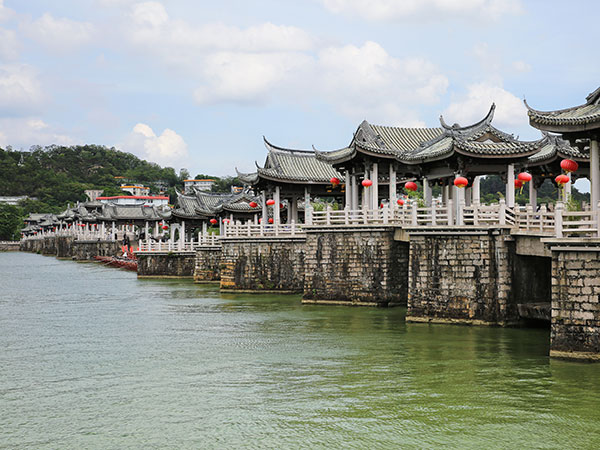
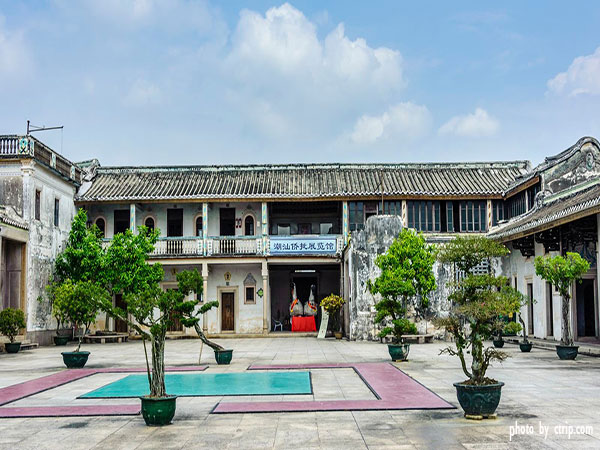
Teochew ancient architecture is an important carrier of Teochew cultural spirit, with distinctive regional characteristics, integrating Central Plains architectural etiquette and coastal folk characteristics. The most representative are ancestral halls, ancient temples, and traditional courtyard dwellings, forming a unique architectural style of “grand momentum, exquisite decoration, and rigorous layout”.
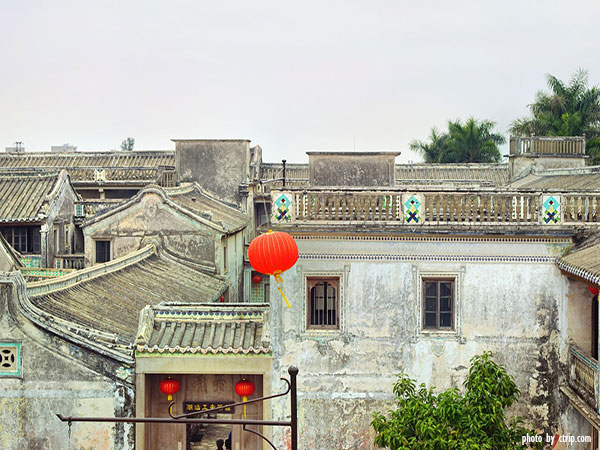
Teochew ancient buildings pay attention to symmetrical layout and hierarchical order, reflecting the Teochew people’s emphasis on clan etiquette and traditional ethics. The building exteriors and interiors are decorated with a large number of wood carvings, stone carvings, brick carvings, and color paintings, with exquisite craftsmanship and rich cultural connotations. The well-preserved ancient streets and ancestral halls in Chaozhou Ancient City and Puning Ancient Village fully display the superb architectural art and profound cultural heritage of ancient Teochew. These ancient buildings are not only material cultural heritage but also spiritual homes carrying Teochew people’s family memories and cultural identity.

 English