Your China & Yunnan Travel Experts


 Ask a Question
Chaozhou lies in eastern Guangdong Province, neighboring Shantou and Jieyang, and together these three cities make up the Chaoshan region. As one of China’s national historical and cultural cities, Chaozhou is widely regarded as the birthplace of authentic Chaoshan culture. Famous as a major hometown of overseas Chinese, it draws countless Southeast Asian visitors from Malaysia, Singapore, Thailand and Indonesia every year, who come to trace ancestral roots, experience traditional culture and taste genuine Teochew food.
Unlike modern‑style Shantou, Chaozhou is more traditional with preserves well‑preserved ancient streets, centuries‑old temples and time‑honored folk customs.
Chaozhou is located in the eastern part of Guangdong, along the lower reaches of the Han River, only about 40 minutes’ drive from downtown Shantou. It covers an area of roughly 3,146 square kilometers, with a permanent population of around 2.7 million people. Most local residents speak the Teochew dialect, the same language used by millions of overseas Chinese in Southeast Asia, so many visitors can easily communicate with locals and feel a strong sense of familiarity here.
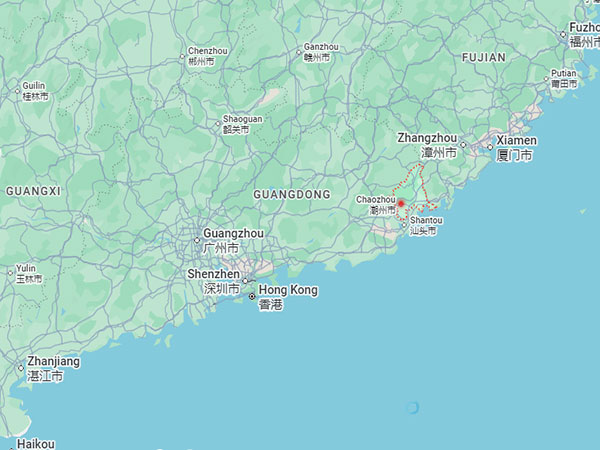
Chaozhou features a warm subtropical monsoon climate. Summers are hot and humid, while winters are mild and comfortable with rare cold weather. The best time to visit is from October to December, when the weather is cool and dry, perfect for sightseeing and walking around ancient streets. Spring is also a nice season, with blooming flowers and fresh air. The Han River runs through the whole city, bringing rich water resources and fertile land, which helped Chaozhou develop into a prosperous cultural and commercial center more than 1,600 years ago.
Chaozhou has a history of more than 1,600 years and was built as early as the Eastern Jin Dynasty. For hundreds of years, it was the political, cultural and educational center of the entire Chaoshan area, earning the reputation of “Coastal Zou‑Lu”, meaning a land of scholars and culture along the sea. Many famous ancient Chinese officials and scholars once worked here, the most well‑known being Han Yu, a great poet and philosopher of the Tang Dynasty. He greatly improved local education and culture, leaving a deep influence on Chaozhou people’s spirit and values. Today, many place names, temples and customs still remember his legacy.
From the Ming and Qing dynasties onward, many Chaozhou people sailed to Southeast Asia for business and work, forming huge overseas Chinese communities across Malaysia, Singapore, Thailand, Vietnam and Indonesia. Up to now, more than 7 million overseas Chinese worldwide have Chaozhou origins. Unlike Shantou, which grew as a modern port city, Chaozhou keeps most of its old‑town layout, ancient buildings and traditional lifestyles. For overseas Chinese, visiting Chaozhou is more than traveling — it is returning to the root of Teochew culture.
Chaozhou is the real home of classic Teochew culture, including opera, embroidery, wood carving, kungfu tea and folk rituals that are still passed down from generation to generation. These traditions have also been brought to Southeast Asia by overseas Chinese, so many visitors will find familiar cultural elements here.
Teochew Opera is one of the oldest traditional operas in southern China, with a history of over 500 years. It features gentle singing, delicate costumes and vivid facial makeup, telling stories of history, loyalty and folk legends. You can watch real‑life opera performances in old streets or ancient theaters, a precious cultural experience rarely seen in modern cities.
Chaozhou Embroidery and wood carving are world‑famous traditional handicrafts. The embroidery uses bright colors and fine stitching to make elegant patterns, while wood carving decorates ancient temples and ancestral halls with detailed stories. Many overseas Chinese buy these handcrafts as souvenirs to take back home.
Gongfu Tea culture originated from Chaozhou. Locals make tea with tiny teapots and small cups, focusing on every step of brewing. Drinking tea is not only a daily habit but also a way of receiving guests, chatting and relaxing. Almost every family and shop in Chaozhou serves gongfu tea, just like many Teochew families in Southeast Asia do. It is a simple but warm part of daily life here.
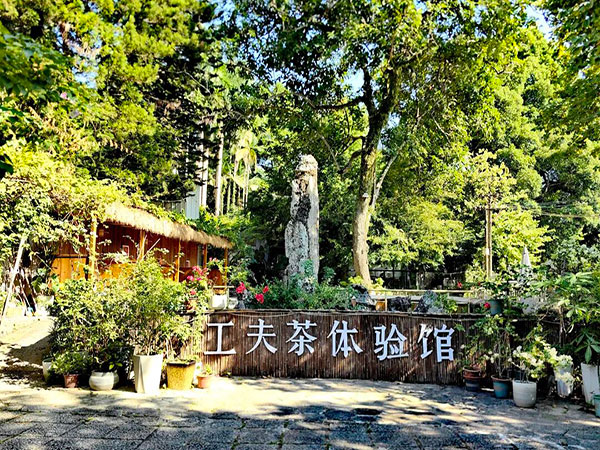
Local folk customs are well‑preserved too. Traditional festivals such as Spring Festival, Mid‑Autumn Festival and Mazu worship are celebrated with grand parades, dragon dances and lion dances. Ancestor worship is still important in Chaozhou, reflecting the deep family values shared by most overseas Chinese communities.
Chaozhou’s highlights are all about ancient architecture, river scenery and slow‑paced old‑town life. Most scenic spots are close to each other, perfect for a one‑day or two‑day walking tour.
Ancient City Wall and Paifang Street
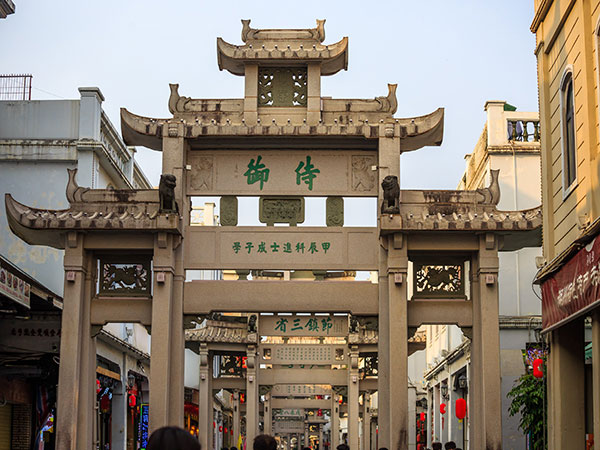
Paifang Street is the heart of Chaozhou Old Town, lined with more than 20 ancient stone memorial archways built during the Ming and Qing dynasties. Every archway tells the story of local scholars, officials and heroes. Walking along this street, you will pass old houses, traditional shops, tea houses and snack stalls. The well‑preserved city wall runs along the Han River, where you can walk or cycle and enjoy river breezes and sunset views. This area is the most popular spot for food hunting and taking photos.
Guangji Bridge
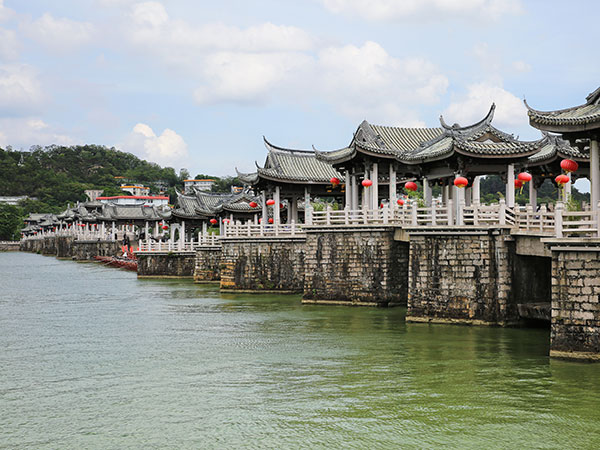
Also known as Xiangzi Bridge, Guangji Bridge is one of China’s four most famous ancient bridges, built over 800 years ago. Its special design combines stone piers, beam bridges and floating pontoons, unique in the whole country. At sunset, the bridge with ancient towers looks stunning above the Han River. It is a must‑visit landmark of Chaozhou.
Kaiyuan Temple
Kaiyuan Temple is one of the largest and oldest Buddhist temples in eastern Guangdong, with a history of over 1,200 years. Inside the temple, you can see ancient Buddha statues, wood carvings and stone artworks. The quiet and peaceful atmosphere lets visitors feel the long history of local religion and culture. Many overseas Chinese come here to pray and worship.
Other Scenic Spots
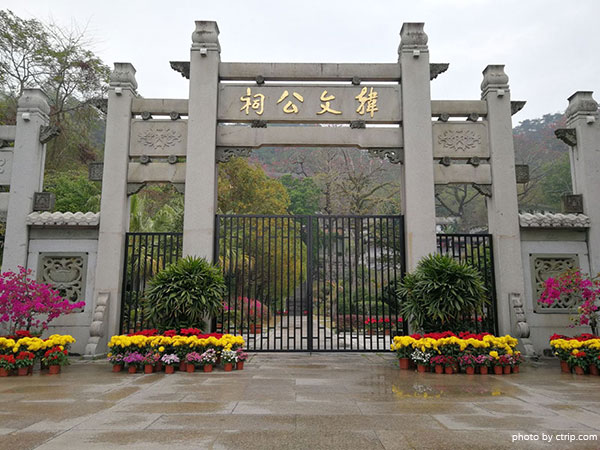
Other famous sites include Han Yu Memorial Temple, West Lake Park, and the ancient water towns along the Han River. You can also visit traditional ancestral halls, which show the clan culture deeply respected by Teochew people both in China and overseas.
Chaozhou is widely considered the birthplace of Teochew cuisine, lighter and more delicate than Shantou’s food style. It focuses on fresh ingredients, natural flavors and simple cooking skills, with a perfect balance of salty and sweet tastes.
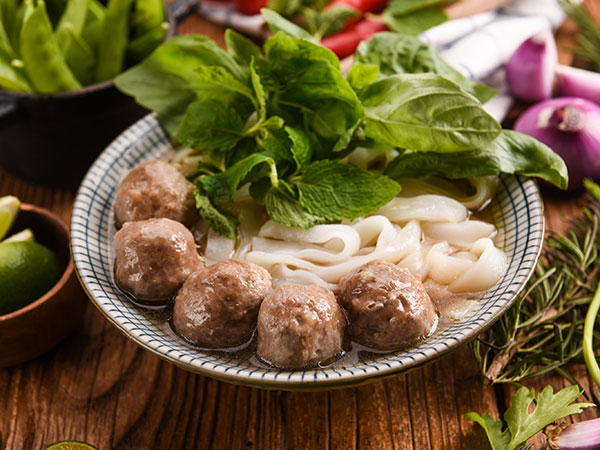
Marinated raw seafood, beef balls, fish balls and seafood hot pot are all classic dishes here. Hand‑pounded beef balls from Chaozhou are bouncy and full of meat flavor, famous all over the world. Braised goose is another signature food — slow‑cooked with old brine sauce, tender and savory. Street foods such as rice noodle rolls, oyster omelets, sweet‑scented congee and taro pastries are cheap and delicious.
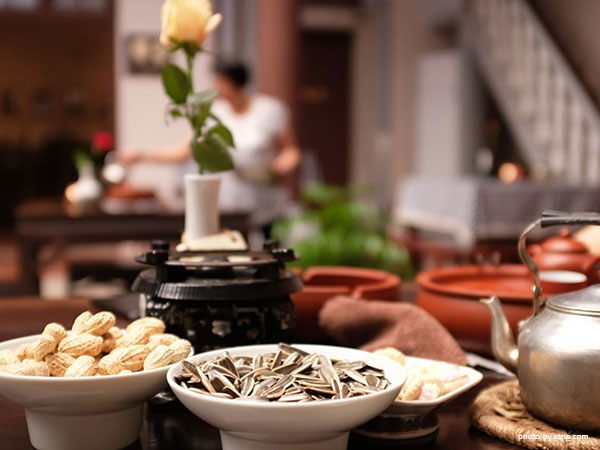
Sweet snacks are also a big feature of Chaozhou cuisine. Peppermint candy cakes, sesame pastries and taro balls carry childhood memories for many Teochew overseas families. Most local food stalls are family‑run with decades‑old recipes, offering genuine flavors hard to find elsewhere.
Traveling to and around Chaozhou is very convenient. High‑speed trains connect Chaozhou Railway Station with Shantou, Guangzhou, Shenzhen and Xiamen. You can take a high‑speed train from Shantou to Chaozhou in only 20 minutes. For air travel, fly to Jieyang Chaoshan International Airport, then take a taxi or shuttle bus to Chaozhou, around 40 minutes away.
Within the city, shared electric scooters are the most popular choice for tourists, ideal for exploring narrow old‑town alleys and food streets. Public buses cover major scenic spots with low fares. Walking is also great in the old town, as most attractions are within short distance. If you want to travel between Chaozhou, Shantou and Jieyang, taxi or chartered car is a comfortable option.
For most travelers, staying near Paifang Street and the Ancient City Wall is highly recommended. Many boutique homestays, budget hotels and mid‑range hotels are available here. Living in the old town lets you easily access food stalls, ancient streets and night views, fully experiencing local daily life.
If you prefer modern facilities and quiet surroundings, you can choose hotels near the railway station or Han River waterfront area. There are also high‑quality resorts around West Lake Park for a relaxing stay. Chaozhou has fewer luxury five‑star hotels than Shantou, but homestays are very charming and offer a real local experience.

 English