Your China & Yunnan Travel Experts


 Ask a Question
Tea culture is an important part of Chinese culture. And teahouse culture has long enjoyed a good reputation around the world, to get immersed in local Beijing folk culture. In spite of what the name indicates, teahouses are not only the places to savor fine tea, but also a good way to experience the Chinese tradition culture and see how local people enjoy their spare time. Tradtional performances, such as the Beijing Opera, comic dialogue, acrobatics, magic tricks, etc. are usually put on in teahouses. And food and snacks may be served at some teahouses with extra costs. In a word, teahouses are ideal places for leisure, offering tea, snacks and entertainment performances.
Traditional Beijing teahouse is not a tea house for drinking tea, on the contrary, it is often noisy and lively. There is something to do with character of Pekingese. They do not like to be lonely . They love to talk a lot. Teahouses are ideal places for them to have social activities with their friends or neighbors. There are quite a few famous teahouse with long history for tourists to visit.
• English Address: Bldg. 3, Qianmenxi Main Street, Xicheng District, Beijing 100051, China
• Chinese address: 北京西城区前门西大街正阳市场3号楼
• Opening times: 9:00am-9:20pm every day
• Telephone: 010-63036830, 010-63021717
• Transportation: Visitors can take Bus Route No.17, 22, 43 or 826 to Qianmen Station. Alternatively, take Subway Line 2 and get off at Qianmen Station.
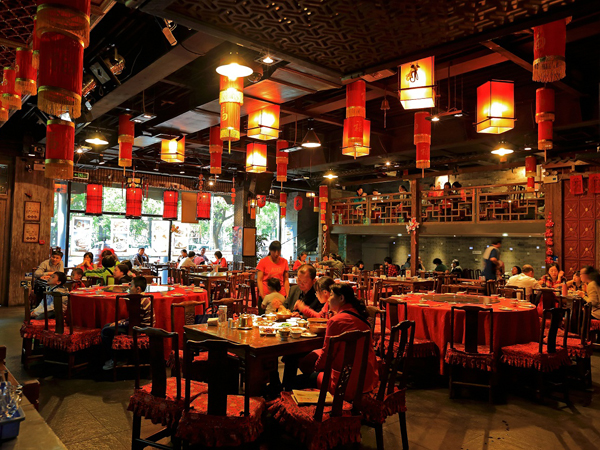
In Laoshe Teahouse you can deeply feel the old Beijing traditional culture. Firstly, the decoration of the teahouse is in old Beijing style, with ancient wooden furniture. Secondly, every day you can enjoy a convergence of Peking opera, folk arts, acrobatics, magic, face-changing and other local wonderful performances. One can also taste various types of tea, fine court dessert and traditional Beijing snacks. You will get an opportunity to buy the teas on offer, but the price would be expensive than other places.
Since its opening, Laoshe Teahouse has received nearly 47 foreign heads of state, many celebrities and more than 200 million Chinese and foreign tourists. It has become a display window of unique national culture.
• Address: No.18, Wanming Lu, Xuanwu District, Beijing
• Tel: 010-63032056
Zhang Yiyuan Teahouse not only offer tea for guests, but also has a few private rooms and a theatre hall, so you can enjoy your tea in private, watch Beijing opera or listen to Chinese comedy. Some claim that they have the best tea in all of Beijing.
• English Address: Inside Dajue Temple, Haidian District, Beijing, China
• Chinese address: 北京海淀区苏家坨镇北安河乡大觉寺内
•Opening times: 10:00am-10:00pm every day
• Telephone: 010-82076012
• Transportation: Visitors can take Bus Route 633 or 346 to get there.
Minghui Teahouse is quieter than Laoshe tea house. Once can taste the famous Hangzhou Longjing tea cooked by Hupao water, which are both unique things in Hangzhou. The teahouse is surrounded by spring and old tress. The teahouses here are divided into six private rooms, so guests can be fully relaxed in the comfortable and pleasant environment. The staff are all dressed in traditional clothes of the Qing Dynasty. When savoring a cup of tea, you may feel your troubles have disappeared.
• Address: 1F Bldg. R, Huiyuan Apartment, Asian Games Village, Chaoyang District, Beijing
• Tel: 010-84977951, 010-84991699
Bi Lu Xuan Teahouse is decorated in Suzhou garden style. With comfortable environment and perfect location, the tea house has become an ideal place for business talks. There are a few private rooms in the teahouse. And the tea master.
Wuyutai is one of Beijing’s oldest and most recognized tea brands. With a history of more than a hundred years, it is famous for jasmine tea, a signature flavor representing Beijing. Many branches have transformed into teahouses combining tea tasting, sales, and cultural display. Inside the teahouse, you can see traditional tea utensils, elegant calligraphy works, and seasonal flower arrangements, creating an atmosphere both refined and authentic. Guests can order jasmine tea, oolong tea, or green tea, accompanied by Beijing-style pastries such as pea cakes and fried dough twists.
Some Wuyutai teahouses occasionally hold small-scale tea ceremonies, where tea masters demonstrate the brewing of jasmine tea using traditional techniques. Watching the process is enjoyable, and the aroma of jasmine slowly spreading in the air adds a special charm to the experience.
Located in a quiet hutong neighborhood, Qing Feng Ya Yun is a popular teahouse among young locals. It features a mixture of tea culture, books, calligraphy, and incense. The space is decorated in a minimalist Chinese style, with bamboo furniture, stone tables, and displays of traditional crafts. Guests can enjoy single-origin teas from across China—Tieguanyin, white tea, Pu’er, and more.
What makes this teahouse special is its peaceful atmosphere. Many visitors come here to read, write, or simply relax. Soft music plays in the background, and the scent of tea blends with the faint aroma of incense, giving guests an escape from the busy city life. Occasionally, the teahouse hosts workshops on flower arrangement, seal carving, and tea utensils, further enriching the cultural experience.
Huguosi Teahouse is an ideal place for visitors who want to experience authentic “old Beijing life.” Located near the famous Huguosi Snack Street, the teahouse continues to serve Beijing-style drinks and snacks. The teahouse is always lively, with seniors chatting, locals playing chess, and young people stopping for a cup of tea. Visitors may enjoy mung bean milk, rock sugar lotus root, or Beijing-style pastries while having a cup of hot tea.
The charm of Huguosi Teahouse lies in its simplicity. It is less refined than other teahouses but offers a strong sense of daily life in Beijing. For travelers, it is an excellent place to observe local culture, listen to Beijing dialect, and feel the warmth of traditional communities.

 English